Pattern Recognition Solutions for Automation: Practical Uses, Technologies, and Challenges

Pattern recognition solutions are revolutionizing automation by enabling machines to identify and act on patterns in data, images, and signals, enhancing efficiency and decision-making across industries. Powered by machine learning and deep learning technologies like neural networks, support vector machines, and clustering, these solutions automate complex tasks in healthcare, finance, manufacturing, autonomous vehicles, agriculture, and more. They improve accuracy, speed, and scalability while reducing costs and human error. Developing effective pattern recognition systems involves defining goals, gathering quality labeled data, selecting appropriate algorithms, training models, and integrating them into workflows. Despite challenges such as data quality, privacy concerns, algorithm selection, system integration, and talent shortages, businesses benefit from increased consistency, actionable insights, improved safety, and innovation opportunities. High-quality data and advanced deep learning models, particularly CNNs and RNNs, significantly enhance the capabilities of these solutions, enabling real-time video analysis, natural language processing, and predictive analytics. Organizations starting with pattern recognition should focus on clear objectives, pilot projects, compliance, and continuous improvement. The future promises advances like automated edge computing, self-learning systems, real-time processing, and broader accessibility via cloud platforms, making pattern recognition a vital component of smart, efficient automation strategies across sectors.


Predictive Analytics Expert for Data-Driven Decisions: What You Need to Know

A predictive analytics expert uses data, statistical models, and machine learning to forecast future business outcomes, enabling informed, data-driven decisions. Combining skills in statistics, programming (Python, R, SQL), and data preprocessing, these professionals transform raw data into actionable insights, helping companies optimize marketing, operations, and resource allocation. Key techniques include regression, classification, clustering, and neural networks, supported by tools like IBM SPSS Modeler, Microsoft Azure ML, and SAP Analytics Cloud. Predictive analytics experts collaborate across teams to define goals, build and validate models, and communicate results clearly to non-technical stakeholders. Their work enhances forecasting accuracy, reduces risks, improves customer targeting, and drives strategic planning across industries such as retail, finance, healthcare, manufacturing, and telecommunications. Challenges include data quality, model maintenance, communication barriers, and privacy concerns, which experts address through rigorous data cleaning, adaptable models, and clear visualizations. Organizations can integrate predictive analytics by hiring experts, training staff, or consulting specialists, starting with focused projects and scaling as capabilities grow. This approach empowers businesses of all sizes to anticipate trends, respond proactively to market changes, and maintain a competitive edge through evidence-based strategies.

Business Intelligence Implementation Examples That Inspire Real Change

Business intelligence (BI) transforms raw data into actionable insights, driving smarter decisions and operational efficiency across industries. Leading companies like Lotte.com, Cementos Argos, Baylis & Harding, Sabre Airline Solutions, and Univision showcase BI’s impact—from optimizing inventory and forecasting demand to personalizing marketing and enhancing customer engagement. Industries such as retail, finance, manufacturing, airlines, and media leverage BI for real-time analytics, fraud detection, production management, and customer trend forecasting. Successful BI implementation involves setting clear goals, assessing data quality, selecting appropriate tools, integrating data, developing intuitive dashboards, training staff, and continuous refinement. Key success factors include robust data integration, advanced analytics, user-friendly visualizations, scalability, and fostering a data-driven culture. Despite challenges like data quality issues, integration hurdles, and user resistance, effective planning and change management mitigate risks. BI tools like data warehouses, ETL processes, Tableau, Power BI, predictive analytics, and mobile BI enhance accessibility and decision-making speed. Small and medium businesses also benefit from scalable, affordable cloud-based BI solutions, enabling competitive growth and market responsiveness. Ultimately, organizations that embed BI into their strategy and culture achieve faster, evidence-based decisions, improved customer targeting, increased revenue, and sustained competitive advantage.

Unlocking Insights: Choosing Data Visualization Partners for Impactful Dashboards

Choosing the right data visualization partners is essential for creating impactful dashboards that transform complex data into clear, actionable insights. These experts go beyond basic chart creation by aligning visuals with business goals, audience needs, and datasets to drive informed decision-making. Effective partners focus on clarity, simplicity, and accessibility, using appropriate chart types—such as line, bar, scatter, funnel, and geographical maps—to highlight key messages. They embrace modern tools like Tableau and Power BI and integrate automated reporting to ensure up-to-date information. Collaboration with these partners involves setting clear goals, sharing context, iterative feedback, and user testing to optimize dashboard usability. Key industries benefiting from such partnerships include finance, healthcare, retail, logistics, manufacturing, and government. Avoiding common pitfalls like cluttered visuals and ignoring accessibility ensures dashboards remain user-friendly and impactful. Ultimately, successful data visualization partnerships enhance data storytelling, empower faster, confident decisions, and improve business outcomes through continuous refinement and alignment with evolving needs.

How Cloud Data Engineering Providers Power Analytics for Modern Businesses

Cloud data engineering providers play a crucial role in enabling modern businesses to harness advanced analytics by managing data collection, transformation, storage, and orchestration in the cloud. They simplify complex technical processes, allowing organizations to focus on deriving actionable insights. Key features to look for include scalability, robust ETL and warehousing, semantic business intelligence, data governance, AI-driven analytics, multi-cloud support, automation, and strong security compliance. Integration with existing infrastructure is seamless through hybrid cloud environments, containerization, and plug-and-play connectors, ensuring smooth transitions without disrupting legacy systems. Cost benefits arise from pay-as-you-go models, elastic scaling, and reduced operational overhead, enabling businesses to scale analytics efficiently and innovate without heavy upfront investments. Leading providers like AWS, Microsoft Azure, Google Cloud, Snowflake, and Databricks offer diverse tools and multi-cloud capabilities tailored to various business needs. AI integration enhances data quality, predictive analytics, and security. To start, businesses should define analytics goals, assess current systems, pilot projects, and prioritize automation and training. Overcoming challenges such as data silos, legacy system integration, and compliance is easier with expert partners. Cloud data engineering is flexible, scalable, and accessible for businesses of all sizes, supporting both real-time and batch analytics for timely decision-making across industries.

Essential Guide to Data Strategy Roadmap PPT Template Download

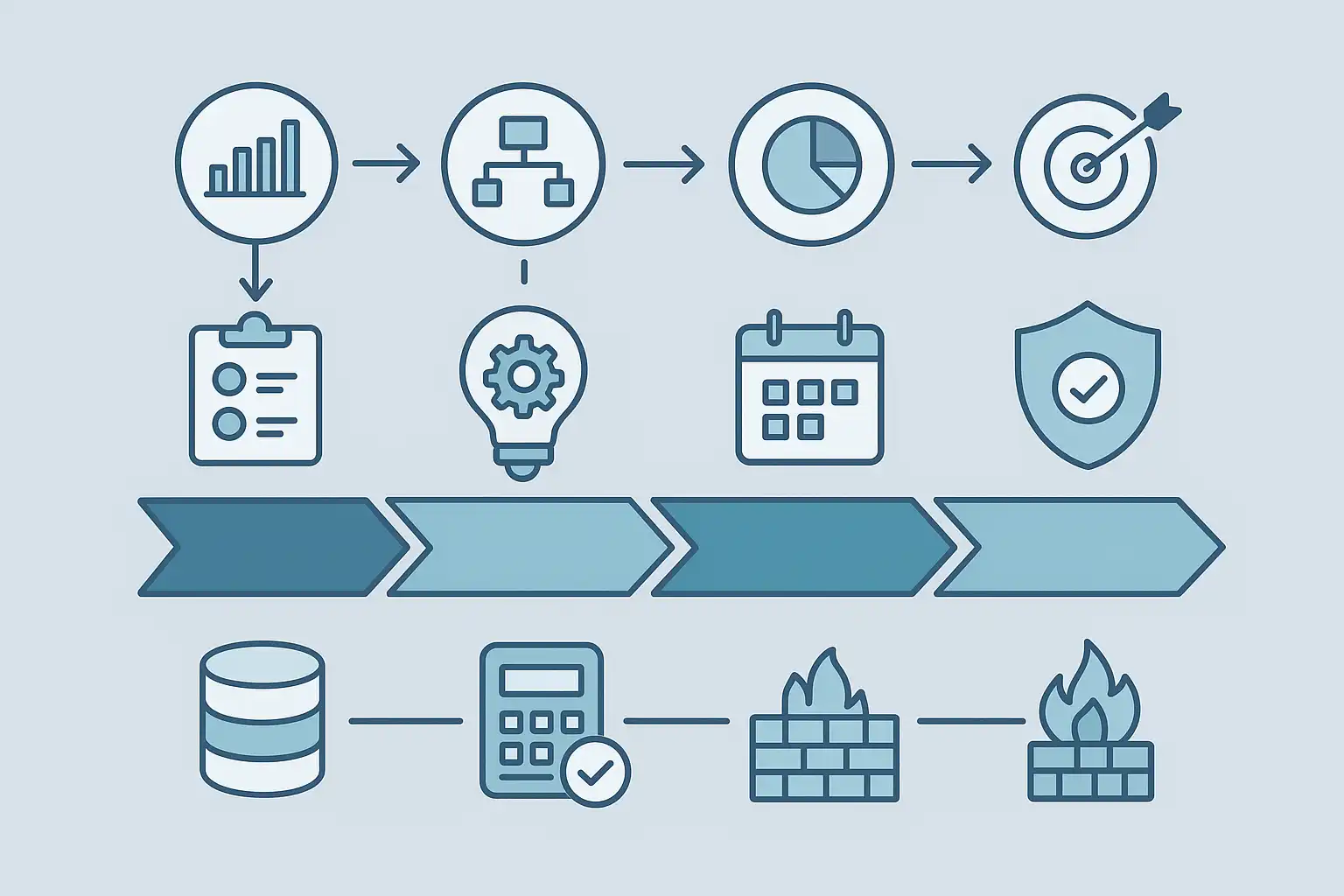
This essential guide explains how to use a data strategy roadmap PPT template to create clear, actionable plans for organizational data initiatives. A data strategy roadmap template visually maps out goals, timelines, phases, responsibilities, budgets, and risk management, aligning data projects with business objectives. It enhances communication among stakeholders, improves coordination, tracks progress, and manages risks through data governance and security features. The guide outlines key components of a good template, including vision, phases, deliverables, timelines, and governance, while emphasizing customization to fit unique organizational needs. It also details steps to download, customize, and maintain a roadmap, encouraging regular reviews and stakeholder feedback to keep the plan relevant. Various roadmap types—from three-month to five-year plans—are discussed, catering to different project scopes. The guide highlights critical template features like multi-phase planning, clear visuals, security elements, and flexible alignment with business strategies. Using these templates streamlines data management by clarifying roles, timelines, and risks, fostering strategic alignment and continuous improvement. Overall, a well-crafted data strategy roadmap PPT template saves time, enhances clarity, and supports effective execution of data initiatives across organizations.

nlp companies in usa leading innovation

NLP companies in the USA are at the forefront of innovation, transforming how technology understands and processes human language. Leading firms like OpenAI, Vectara, Writer, Unbabel, Clarifai, and Rasa develop advanced AI-driven solutions including large language models, conversational platforms, and hybrid human-AI workflows. These technologies enhance industries such as healthcare, finance, retail, education, and legal by improving communication, automating tasks, and delivering actionable insights from unstructured data. The US NLP ecosystem thrives due to strong research collaboration, abundant talent, robust investment, and a culture of rapid adoption. Emerging trends include domain-specific models, multimodal AI, ethical AI practices, and open-source platforms, ensuring scalable, accurate, and inclusive language solutions. Despite challenges like data privacy and bias, American NLP firms continue expanding global reach through multilingual tools and partnerships. Their innovations enable faster decision-making, enhanced customer support, and broader market access, making the USA a global leader in natural language processing technology.

How Time Series Forecasting Services Drive Better Planning Decisions

Time series forecasting services leverage historical data to predict future business trends, helping organizations improve planning, reduce waste, and optimize resource allocation. Utilizing advanced statistical models and machine learning, these services analyze patterns in sales, inventory, and production to generate accurate forecasts. Delivered via software platforms, consulting, or cloud-based solutions, they enable proactive decision-making across industries like manufacturing, retail, pharmaceuticals, and food and beverage. Key benefits include reducing inventory waste by up to 60%, accelerating production cycles, cutting operational costs by around 22%, and improving inventory control with real-time tracking and automated alerts. Integrating forecasting with ERP and supply chain systems enhances accuracy and responsiveness, allowing businesses to better manage seasonal demand fluctuations. Starting with assessing data quality and defining goals, companies can select suitable forecasting models—ranging from ARIMA to deep learning—to build, test, and automate forecasts. While challenges like data quality and setup complexity exist, continuous monitoring and model updates ensure reliable predictions. Accessible to businesses of all sizes, time series forecasting transforms reactive planning into strategic foresight, boosting efficiency, reducing costs, and strengthening competitive advantage.

Data Science Workflow Example to Follow: A Practical Guide

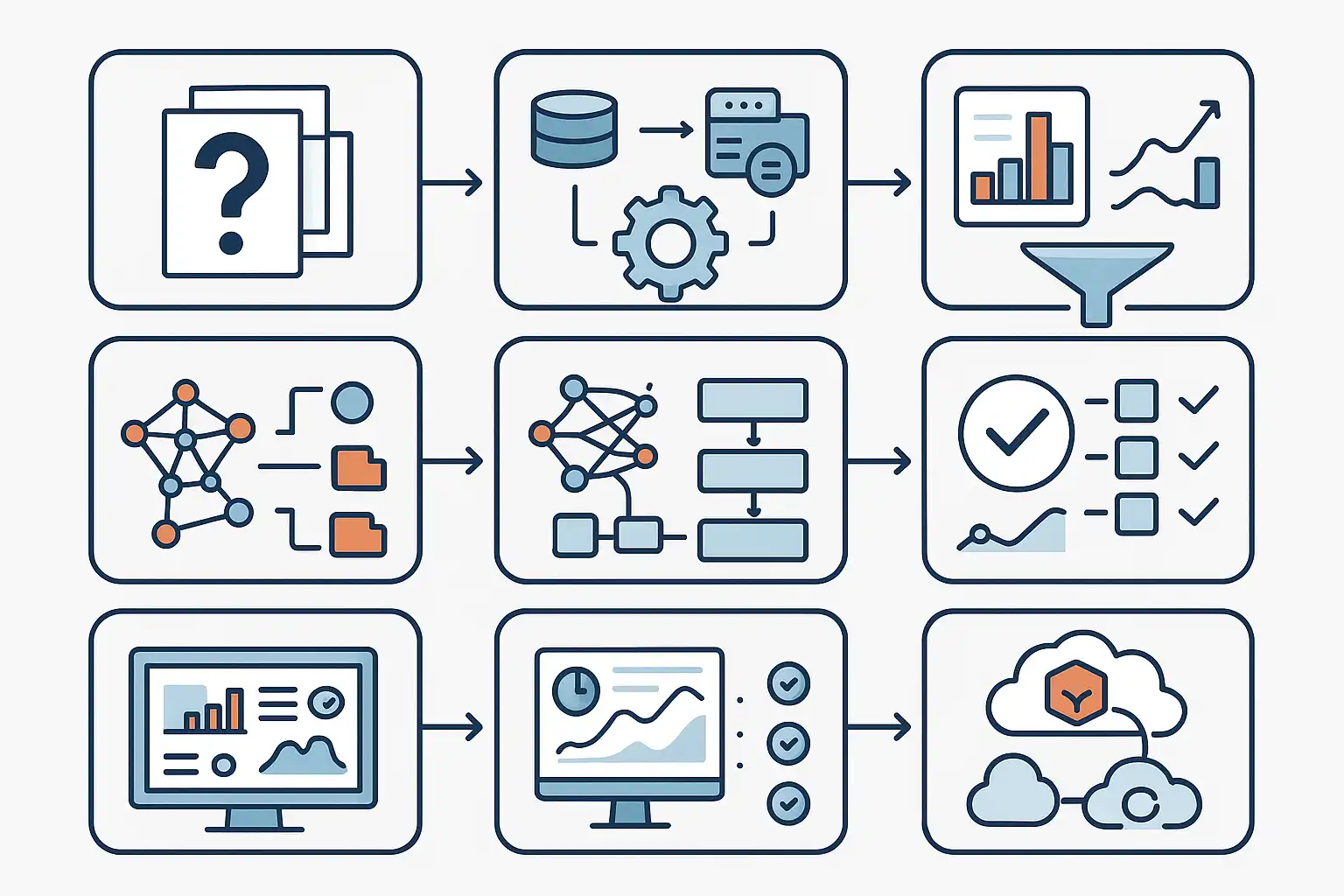
This practical guide outlines a comprehensive data science workflow example, detailing each critical stage from problem definition to deployment and monitoring. Key phases include understanding the problem, data acquisition, exploration and cleaning, modeling, evaluation, communication of results, and deployment. The guide emphasizes starting with clear objectives, using tools like Python, SQL, Tableau, and cloud platforms, and adopting iterative processes to refine models and adapt to changing needs. Popular frameworks such as CRISP-DM, Harvard’s model, and OSEMN provide structured approaches to streamline collaboration, reduce errors, and improve project efficiency. Documenting every step ensures transparency, reproducibility, and ease of onboarding new team members. Challenges without workflows include poor communication, missed steps, and inefficiency. The article highlights customizing workflows to fit team needs, encouraging regular reviews and continuous improvement. By following this structured, iterative workflow, data science teams can deliver actionable insights, enhance collaboration, and ensure reliable, scalable results across projects.

Data Visualization Partners NYC: Top Firms for Effective Insights

Data Visualization Partners in NYC are essential for transforming complex data into clear, actionable insights that drive informed business decisions. Leading NYC firms combine advanced technologies like AI and machine learning with industry expertise to deliver interactive, real-time dashboards tailored to sectors such as healthcare, finance, retail, and customer service. Top partners, including CallMiner and Periscopic, offer customized solutions integrating data security, compliance, and seamless integration with existing systems. The collaboration process typically involves discovery, design, data integration, development, testing, deployment, and ongoing support, ensuring dashboards align with business goals and user needs. NYC firms leverage tools like Tableau, Power BI, D3.js, and cloud platforms to create scalable, user-friendly visualizations. Key trends include AI-driven predictive analytics, self-service dashboards, real-time data streams, and inclusive design. Choosing the right partner requires evaluating clarity, storytelling ability, technical expertise, security, and compatibility. Local NYC firms offer market-specific knowledge and faster collaboration, while global agencies bring broader resources and scalability. Investing in top-tier data visualization partners yields significant ROI through improved decision-making, operational efficiency, and enhanced customer experiences, supported by training and continuous support post-deployment.