
Social Media Content Planner for LinkedIn Made Simple
A social media content planner for LinkedIn helps you post with purpose, not panic. The best weekly structure is simple: choose three to five posting days, give each day a clear theme, rotate formats, and track what earns comments, saves, and conversations. This approach keeps your content consistent, useful, and easier to create.
LinkedIn works well when people know what to expect from you. That does not mean every post should sound the same. It means your audience should quickly recognize your point of view, the problems you solve, and the value you bring. A weekly plan turns random posting into a steady rhythm that supports brand trust and business growth.
Why does a weekly LinkedIn plan work so well?
It reduces decision fatigue. Instead of asking, “What should I post today?” you already know the theme, format, and goal. That saves time and lowers stress. It also helps you create better content because you can batch ideas, write ahead, and refine your message before publishing.
A weekly LinkedIn social media strategy plan also creates balance. Many brands post only promotional updates, then wonder why engagement stays low. People on LinkedIn want insight, proof, personality, and practical help. When your week includes several content types, your profile feels more human and more credible.
Consistency matters too. For most brands, posting three to five times a week is enough. That pace keeps you visible without overwhelming followers. Quality matters more than volume. One clear post that starts discussion can outperform several weak posts that collect a few likes and disappear.
What are the core parts of a strong weekly structure?
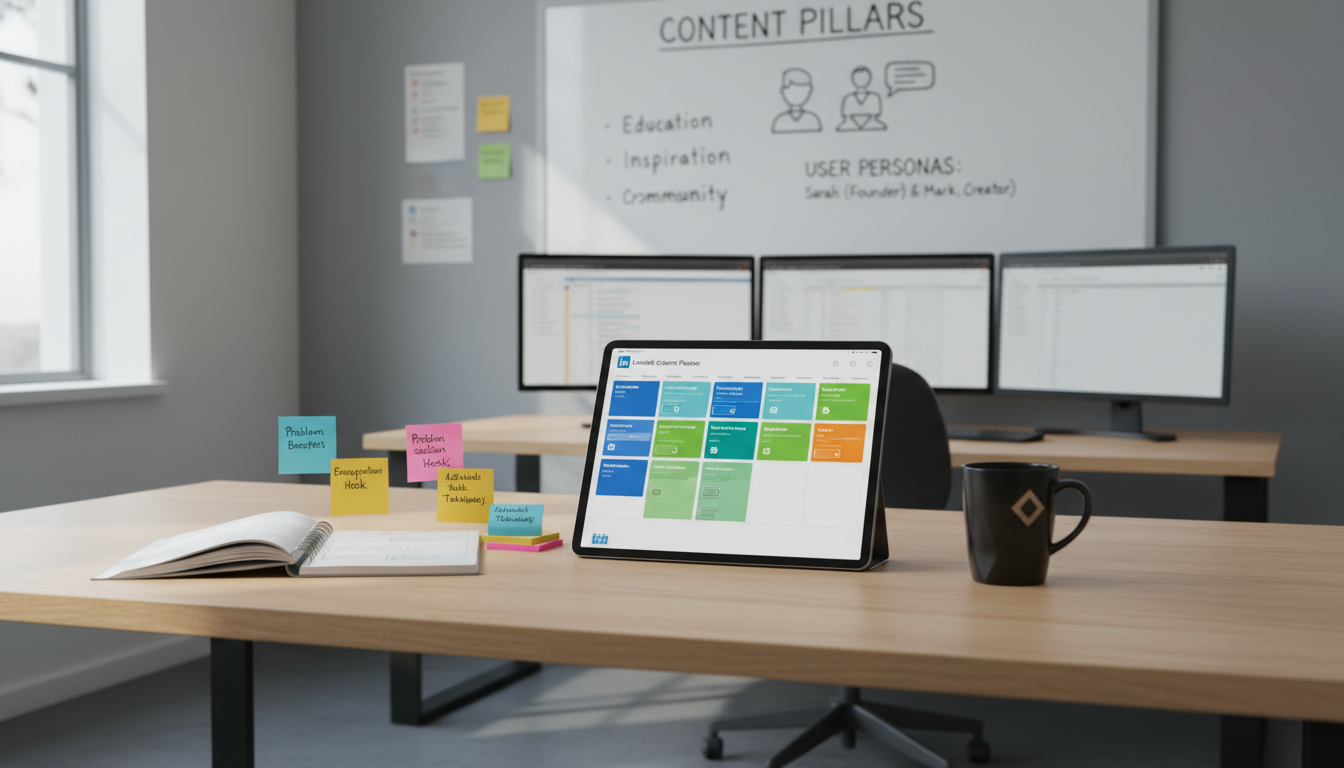
An effective plan usually starts with content pillars. These are your main themes, such as education, industry insight, personal story, customer proof, and community engagement. Each post should connect to at least one pillar so your message stays focused over time.
You also need a clear audience picture. Know who you want to reach, what they struggle with, and what result they want. A founder, consultant, recruiter, software company, and training business may all use LinkedIn, but their weekly plan should reflect very different audience needs.
Strong posts often include three simple elements:
- A hook that earns attention in the first line
- A useful idea, story, framework, or proof point
- A clear takeaway or call to action
Storytelling is especially useful on LinkedIn. It gives context to a lesson and helps your audience remember it. A short story about a client mistake, hiring challenge, product lesson, or leadership moment can make an ordinary tip feel real and relatable.
How should you structure your LinkedIn week?
A practical social media content planner for LinkedIn can follow a simple pattern. You do not need to post every day. You need a repeatable system that fits your time, voice, and goals. Here is a flexible structure for four posting days:
- Monday: educational post that teaches one useful idea
- Tuesday: personal story or founder insight with a business lesson
- Thursday: proof post with results, case study, testimonial, or example
- Friday: community or opinion post that invites discussion
This mix supports engagement and trust. Educational content helps people learn. Stories build connection. Proof builds confidence. Discussion posts spark comments, which often increase reach more than likes alone.
If you prefer five posts a week, add an industry trend post on Wednesday. Share a change in your field, explain what it means, and give one practical next step. That keeps your brand relevant without sounding like a news feed.
Example weekly themes
Many creators use recurring themes because they simplify planning. You might choose personal branding on Monday, how-to advice on Tuesday, market insight on Wednesday, client wins on Thursday, and engagement on Friday. This idea appears in many LinkedIn weekly content planner for engagement frameworks because it is easy to sustain.
You can also vary format across the week. One day can be a text post, another a carousel, another a short video, and another a document post. Different formats keep your feed fresh and help you learn what your audience prefers.
How can businesses tailor the plan to their audience?
Start with the buyer journey. Some people need awareness content because they do not fully understand the problem yet. Others need proof because they are comparing options. Your weekly calendar should support both groups instead of repeating the same kind of message.
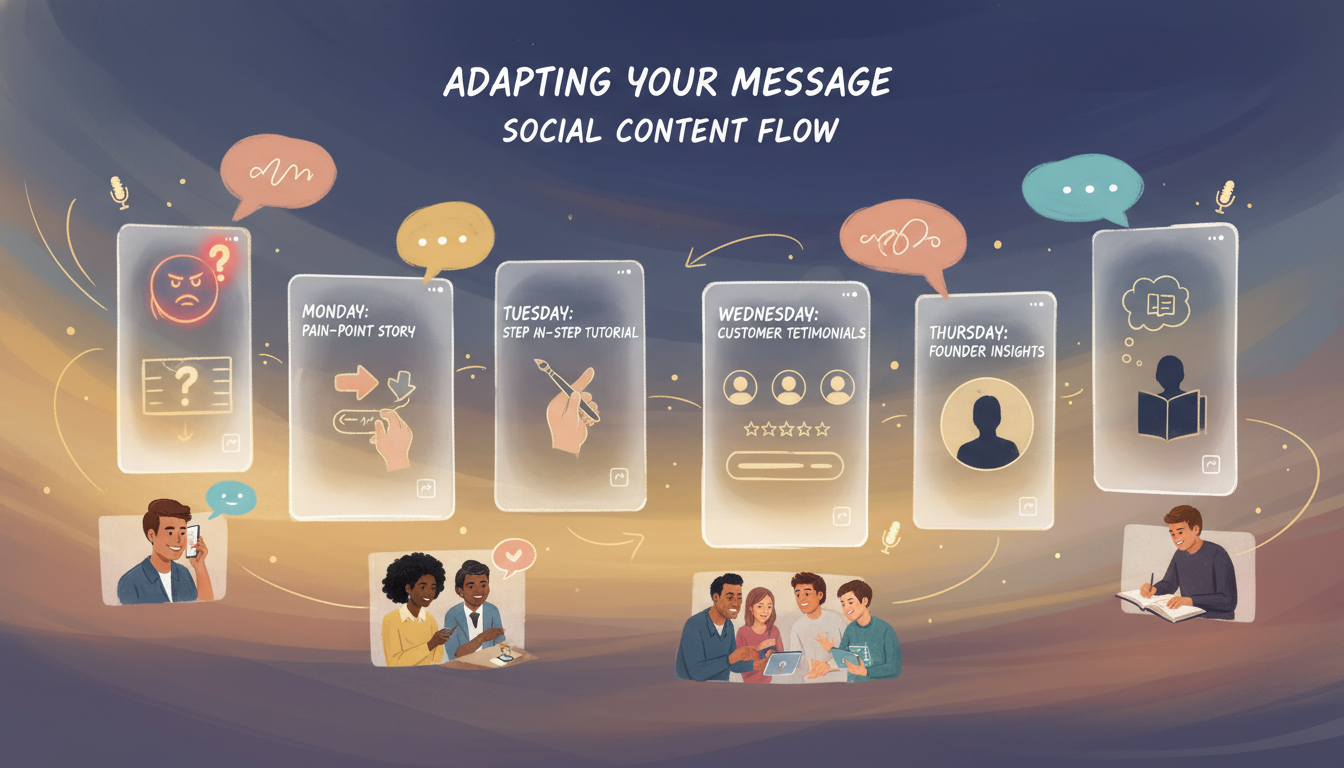
For example, a B2B software brand may publish a pain-point post early in the week, a tutorial in the middle, a customer result later, and a direct invitation to book a demo at the end. A coach may lean more on stories, frameworks, and personal beliefs. The structure can stay steady while the topics change.
Authenticity helps. Founder-led content often performs well because it sounds real. Interviews with sales staff, customer service teams, or clients can also generate ideas. Real conversations usually reveal better post angles than guessing alone.
Which tools and habits make planning easier?
You do not need a complex system, but you do need one place to manage ideas. Tools like monday.com, Notion, Trello, and Airtable can store content themes for business growth, draft captions, and approval notes. Scheduling tools such as HubSpot, Buffer, or Hootsuite can help you publish on time.
Batching is one of the most useful habits. Set aside one session to collect ideas, one to draft, and one to schedule. This prevents daily scrambling. AI tools can help polish wording or improve flow, but your voice should stay human. On LinkedIn, that matters.
Performance tracking should focus on meaningful signals. Look closely at comments, saves, shares, profile visits, direct messages, and leads. These often matter more than likes. Many marketers also find that mid-morning, Tuesday through Thursday, can be a strong window, though your own data should guide you.
Simple tracking points
- Post theme and format
- Publishing day and time
- Comments and saves
- Profile visits or clicks
- Replies, DMs, or booked calls

What does an effective posting process look like?
Use a repeatable flow so content creation becomes manageable. Effective LinkedIn post scheduling strategies usually depend on a simple cycle that can be repeated each week.
- Review audience questions, sales calls, and recent wins
- Sort ideas into content pillars and weekly themes
- Draft posts in batches using a clear hook and one takeaway
- Schedule three to five posts
- Engage with comments and relevant conversations daily
- Review results at the end of the week and adjust
This process supports consistency without making your content feel robotic. It also helps teams work together because everyone can see the theme, goal, and status of each post.
FAQ
How often should I post on LinkedIn each week?
For most people and brands, three to five posts a week is a strong target. It is frequent enough to stay visible but manageable enough to maintain quality and thoughtful engagement.
What kinds of posts usually perform best?
Helpful educational posts, short stories with a lesson, proof-driven posts, and opinion posts that invite discussion often perform well. The best mix depends on your audience, offer, and voice.
Should I schedule everything in advance?
Scheduling is helpful for consistency, but leave room for timely ideas and active conversation. A strong planner combines scheduled content with live engagement and occasional reactive posts.
How long does it take to build a weekly LinkedIn plan?
Once your themes are clear, many people can plan a full week in one to two hours. Batching ideas, drafting ahead, and using tools for LinkedIn content creation and tracking can save even more time over the long term.