
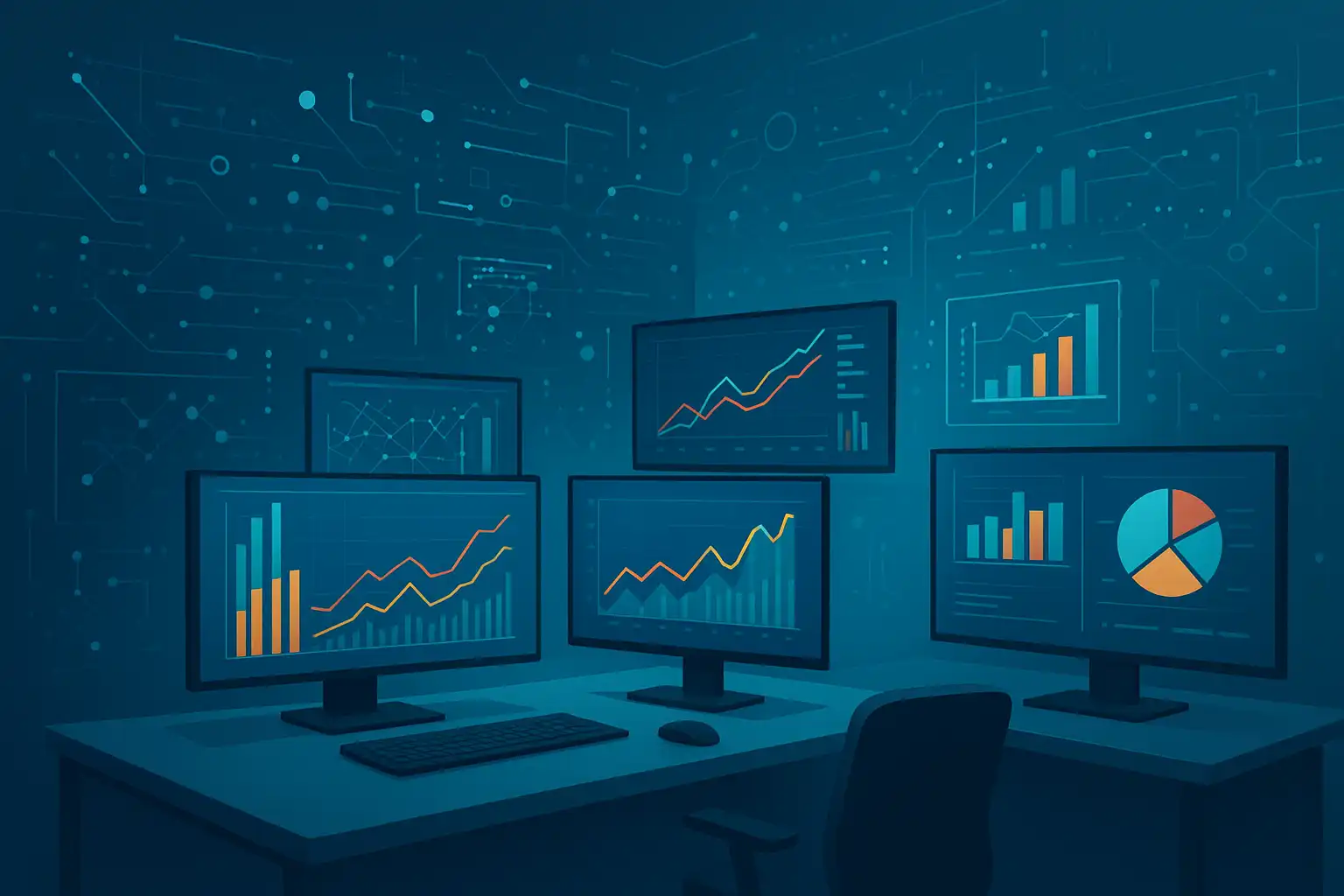
Understanding what a predictive analytics expert does can be the difference between making blind business guesses and making informed, confident decisions based on real evidence. Right from the start, a predictive analytics expert helps organizations use their data not just to see what happened in the past, but to forecast what is likely to happen next. By applying statistical models and modern machine learning techniques, these professionals turn raw numbers into actionable strategies. If you are looking to adopt a data-driven approach in your organization, knowing how a predictive analytics expert works and contributes is crucial.
What Is a Predictive Analytics Expert and Why Do They Matter?
A predictive analytics expert is a professional who specializes in using data to predict future outcomes. This role combines skills in statistics, data science, and domain knowledge to solve business challenges. For instance, companies use these experts to see patterns in customer purchase data, forecast sales, and even predict when equipment might fail.
These experts matter because they help businesses make sense of huge amounts of gathered data. Without their analysis and models, decision-makers would rely on guessing or outdated methods. By bringing scientific rigor to predictions, they reduce uncertainty and let teams focus their resources where they are most needed. In fast-changing industries, this can make a big difference in staying competitive and profitable.

Which Skills Define a Predictive Analytics Expert?
Predictive analytics experts are known for a unique blend of technical and soft skills. Core competencies include a deep understanding of statistical modeling and the ability to clean and preprocess data—key steps before any analysis can begin.
On the technical side, they are often proficient in programming languages such as Python, R, SQL, VBA, and Julia. Their toolbox typically includes statistical techniques like regression, classification, and clustering. Many are also skilled in machine learning, capable of applying algorithms that can find patterns in complex data sets with minimal human direction.
Another crucial skill is data preprocessing. This involves cleaning up data by removing errors, filling in missing values, and handling outliers—odd data points that can skew results. Only with clean, reliable data can accurate models be built.
Besides technical expertise, communication is a must-have skill. Predictive analytics experts must translate their findings for people who may not have a data background. Creating clear visuals, writing reports, and working with data science service providers or business leaders is part of the everyday job.
Many also strengthen their qualifications by earning degrees in fields like statistics, computer science, or business analytics. Short courses, bootcamps, and certifications—offered by platforms like Coursera, edX, and universities—are common ways for experts to keep their knowledge up to date.
Summary of Core Skills and Qualifications
- Strong grasp of statistics and probability
- Programming skills (Python, R, SQL, VBA, Julia)
- Experience with machine learning: regression, classification, clustering, neural networks
- Data preprocessing and cleaning expertise
- Familiarity with predictive analytics software (SPSS Modeler, Microsoft Azure ML, SAP Analytics Cloud, Adobe Analytics, Oracle Analytics Cloud)
- Analytical thinking and problem-solving
- Ability to explain complex results to non-technical audiences
- Continuous learning through courses and certifications
How Does a Predictive Analytics Expert Enable Data-Driven Decisions?
Predictive analytics experts are central to data-driven decision making. They begin by exploring the available data—be it sales records, customer engagement metrics, or operational logs. By applying statistical models and modern analytics tools, they spot trends and hidden patterns that humans might miss.
Once models are built, experts test them to ensure accuracy. For example, a retailer might want to know which products are likely to be in demand next season. The expert will train a predictive model on historical sales data and then validate its predictions on new data.
After validating results, the expert interprets the model’s output. They present these insights using easy-to-understand visuals like charts, graphs, and dashboards. This helps decision-makers quickly grasp the “what” and “why” behind the predictions.
Real-world impact comes from turning these insights into action. For example, a predictive analytics expert can advise a marketing team to target specific customer groups based on expected responses to campaigns. In supply chain management, they might recommend adjusting inventory orders before a big surge in demand. By supporting every step with data, they help organizations act confidently and efficiently.
Data-Driven Decision Process: Step by Step
- Define the business problem or goal
- Collect and prepare relevant data
- Clean and preprocess the data to ensure quality
- Select and build suitable predictive models
- Test and validate model performance
- Present insights and explain results to stakeholders
- Collaborate on actions or strategies based on findings
- Monitor outcomes and update models as needed
Throughout this process, the predictive analytics expert acts as a guide, translating statistical findings into practical actions.
What Tools and Techniques Power Predictive Analytics Experts?
The modern predictive analytics expert relies on a mix of programming, statistical methods, and specialized software. Popular programming languages include Python and R—favored for flexibility and the wealth of available data analysis libraries. SQL is essential for querying and managing large databases, while VBA and Julia find use in niche scenarios or in industries with specific technology stacks.
The backbone of predictive analytics is statistical modeling. Regression analysis is used to predict numerical outcomes like future sales or stock prices. Classification models sort data into categories, such as identifying whether a customer is likely to churn. Clustering groups similar items or customers together when there are no predetermined labels. For complicated tasks like speech or image recognition, neural networks—algorithms inspired by the human brain—come into play.
Equally important is data preprocessing. Before any modeling, data must be cleaned: obvious errors removed, missing values addressed, and outliers handled. This step often takes up to 80% of the total project time, but it is essential for building reliable predictive models.
On the software side, several platforms are popular among predictive analytics experts. IBM SPSS Modeler allows users to build models visually, making it accessible even to non-programmers. Microsoft Azure Machine Learning and SAP Analytics Cloud offer cloud-based solutions that can scale to large data sets. Adobe Analytics and Oracle Analytics Cloud provide tools for integrating data, mining, and producing forecasts or detecting trends.
These systems speed up repetitive tasks, help manage massive data volumes, and often come with built-in models and visualizations. For those looking to add predictive analytics capacity, it is wise to assess which platform fits the team’s size, skill level, and existing technology stack.
Key Predictive Analytics Techniques
- Regression (forecasting sales, demand, or prices)
- Classification (identifying customer segments, fraud detection)
- Clustering (grouping customers or products by similarity)
- Neural networks (complex pattern recognition)
- Input-response analysis (evaluating model sensitivity)
- Data visualization (charts, dashboards, interactive reports)
How Does a Predictive Analytics Expert Improve Business Outcomes?
A predictive analytics expert directly enhances outcomes by giving leaders the evidence needed to make better choices. By forecasting trends, they enable organizations to plan ahead, optimize operations, and allocate resources wisely. No matter the industry—finance, retail, healthcare, manufacturing, or logistics—the value of forward-looking insights is hard to overstate.
For example, in marketing, a predictive analytics expert might help a team anticipate which customers are most likely to respond to an offer. By targeting these individuals, the company can increase campaign effectiveness and improve return on investment. In healthcare, predictive models can identify patients at risk of specific conditions, leading to earlier interventions and better health outcomes.
Experts also work alongside teams to turn data insights into practical actions. They might collaborate with IT, marketing, and operations to implement recommendations. This cross-functional teamwork ensures that predictive analytics are embedded in daily business processes, not siloed in one department.
A company with access to predictive analytics expertise is less likely to be surprised by sudden market changes or swings in customer demand. Instead, it can respond proactively, reducing risks and seizing new opportunities as they arise.
Benefits of Leveraging Predictive Analytics Expertise
- Greater accuracy in forecasts and estimates
- Faster response to market changes
- Reduced operational risks
- Improved customer targeting and satisfaction
- Enhanced strategic planning
- Cost savings through efficient resource allocation
What Are the Main Challenges Faced by Predictive Analytics Experts?
Despite their skills, predictive analytics experts encounter several challenges. Data quality is often the biggest hurdle—messy, incomplete, or inconsistent data can make building accurate models extremely difficult.
Another challenge is ensuring models remain reliable over time. As business environments change, customer preferences shift, or new competitors emerge, predictive models may need frequent updates. Continuous monitoring and retraining are essential to keep predictions on target.
Communication barriers can also slow down the impact of predictive analytics. A brilliant prediction is only helpful if decision-makers understand and trust it. Experts must work hard to convey technical findings in clear, actionable terms.
Finally, ethical and privacy concerns must be considered. Handling sensitive data requires strict attention to security and compliance, especially in fields like healthcare or finance.
How Predictive Analytics Experts Tackle Common Obstacles
- Investing time in thorough data cleaning and validation
- Building flexible models that can adapt to changing data
- Creating intuitive visualizations and reports for stakeholders
- Working closely with teams to ensure insights are acted upon
- Following best practices for data privacy and security
How Do Predictive Analytics Experts Work With Other Teams?
Predictive analytics experts rarely work in isolation. Their success depends on effective collaboration with other teams, such as marketing, operations, IT, and finance.
At the outset of a project, they meet with stakeholders to define goals and understand the business context. This ensures their models are solving real-world problems, not just statistical puzzles. As they build models, they check in regularly with team members to share early findings and adjust their approach if needed.
After delivering predictions, they support teams in interpreting results and making decisions. This might mean helping a marketing team use predictive insights to refine their approach or working with IT to automate scheduled model updates. In some companies, predictive analytics experts even train others to use analytics tools, spreading a data-driven culture across the organization.
For instance, organizations that want to improve their project outcomes often start by reviewing their data science workflow and adopting best practices suggested by predictive analytics specialists, aligning all departments toward a shared vision of data-driven progress.
What Industries Rely Most on Predictive Analytics Experts?
Predictive analytics experts are valuable across nearly every industry. Some sectors, however, are especially reliant on their expertise:
- Retail and E-commerce: Forecasting sales, managing inventory, personalizing marketing
- Finance: Credit scoring, fraud detection, risk assessment
- Healthcare: Patient outcome prediction, resource allocation, disease outbreak forecasting
- Manufacturing: Predictive maintenance, quality control, supply chain optimization
- Telecommunications: Customer churn prediction, network performance forecasting
- Travel and Hospitality: Demand forecasting, dynamic pricing, customer experience management
In each area, the ability to anticipate trends and act quickly gives organizations a competitive edge. Sometimes, a predictive analytics expert recommends deeper customer behavior analysis to uncover actionable insights and fine-tune marketing efforts for better results.
How Can Organizations Get Started With Predictive Analytics Expertise?
Organizations wanting to benefit from predictive analytics have several options. They can hire an in-house expert, work with consultants, or train existing staff. For some, starting small—with a clear business problem and a pilot project—is the best way forward.
Key steps to get started include:
- Identify a specific business challenge that can benefit from prediction
- Assess available data and ensure it’s accessible and clean
- Decide whether to build internal expertise or seek outside help
- Choose the right software tools and platforms for modeling and analysis
- Start with a simple project, learn from results, and expand efforts over time
Consulting with experienced data mining consultants can also be a practical step, especially when an organization is new to advanced analytics or lacks in-house skills.
Tips for Building Predictive Analytics Capabilities
- Focus on real business needs, not just technology trends
- Foster cross-team collaboration and open communication
- Invest in training and upskilling your workforce
- Start small and scale up as experience grows
- Monitor and refine models as business needs evolve
FAQ: Predictive Analytics Expert for Data-Driven Decisions
What qualifications should I look for when hiring a predictive analytics expert?
Look for candidates with strong analytical skills, experience in statistical modeling, and proficiency in programming languages like Python or R. Practical knowledge of predictive analytics software and a track record of solving real business problems are crucial. Certifications and relevant degrees can signal deep expertise.
Can a predictive analytics expert help my small business, or is this only for large companies?
Predictive analytics experts can add value to businesses of any size. Even with modest data sets, they can uncover trends and suggest strategies to improve efficiency or target customers more effectively. Many tools are scalable and accessible for small business budgets.
How long does it take to see results from predictive analytics projects?
It depends on the problem’s complexity, data availability, and the project’s scope. Simple projects may yield insights in a few weeks, while more ambitious efforts can take months. Quick wins are possible with well-defined goals and clean data.
Do predictive analytics experts need domain knowledge, or are technical skills enough?
While technical expertise is essential, domain knowledge greatly enhances the impact of predictive analytics. Experts who understand the industry context ask better questions, identify important variables, and deliver more useful and actionable insights.