

A data science project discovery process template helps you define the problem, choose the right deliverables, plan resources, and spot risks before expensive work begins. In simple terms, it is a structured guide for asking the right questions early, so your team does not rush into modeling without a clear business goal. If you use it well, you improve planning, reduce confusion, and increase the odds of building something useful.
Many teams jump straight into dashboards, machine learning models, or data pipelines. That feels productive, but it often leads to rework. A better path is to slow down at the start. The discovery process gives structure to early conversations with business leaders, analysts, engineers, legal teams, and end users. It turns vague ideas into a practical project plan.
What is a data science project discovery process template?
It is a repeatable document or checklist used at the beginning of a project. The template captures what problem needs solving, why it matters, what success looks like, what data is available, what constraints exist, and how the final solution will be used. Think of it as a bridge between business goals and technical work.
This template is useful for small experiments and large enterprise projects. A startup can use it to validate a churn model idea. A bank can use it to plan fraud detection. A hospital can use it to frame a patient risk prediction project while considering privacy, compliance, and operations.
Why does this template matter so much?
Data science projects fail for familiar reasons. The business problem is unclear. Stakeholders want different outcomes. Data quality is weaker than expected. Teams underestimate privacy rules, deployment needs, or maintenance work. A strong discovery process lowers these risks before coding begins.
It also improves communication. Nontechnical stakeholders can understand goals, assumptions, and tradeoffs in plain language. Technical teams can estimate effort more honestly. This is one reason many organizations include a data science project checklist template in their standard planning process.
The three core parts of the template
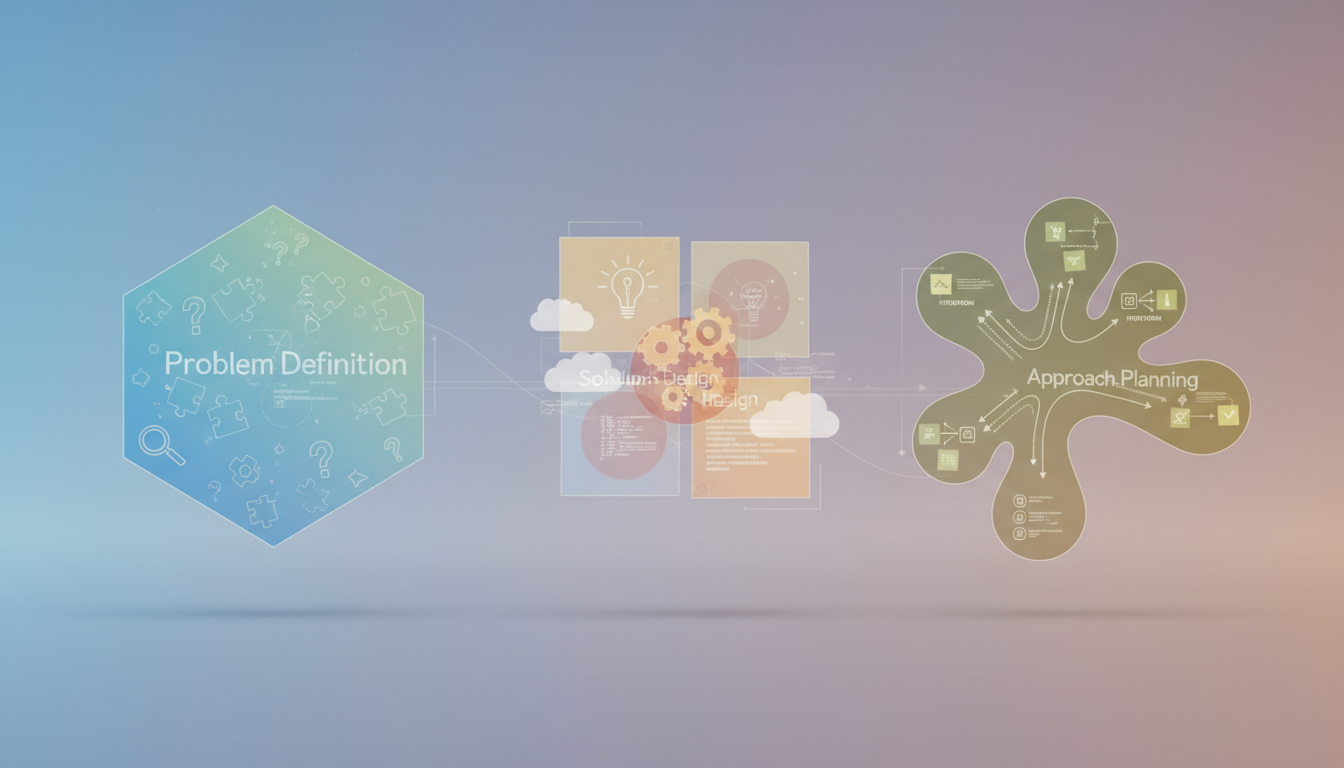
A practical data science project discovery process template usually has three main sections. Together, they create a full picture of the work ahead without pretending that every detail is known on day one.
1. Define the problem or opportunity
Start with the business issue, not the model type. Describe the problem in one or two plain sentences. Then add the goal, expected value, assumptions, and stakeholders. For example, instead of saying, “We need a machine learning model,” say, “We want to reduce customer churn by identifying high risk accounts early enough for retention offers.”
- State the problem or opportunity clearly
- Set measurable goals and success metrics
- List assumptions and hypotheses
- Identify decision makers, users, and owners
2. Define the solution
Next, outline what the project will produce. That could be a dashboard, a predictive model, an API, a batch score file, or a recommendation engine. Map each deliverable to a business need. Then create a small backlog of incremental outputs, not one giant final promise.
This is where an agile data science project discovery process becomes helpful. Instead of waiting months for one release, the team can deliver a baseline analysis, then a prototype, then a tested version, then production monitoring. Each step creates learning and reduces surprise.
3. Define the approach
Now explain how the work may happen. Cover people, tools, data needs, privacy, prior work, timelines, dependencies, and risks. Mention what is uncertain. Data science is rarely linear, so the roadmap should be realistic rather than rigid.
Useful tools at this stage may include Jira for backlog tracking, Confluence or Notion for documentation, Miro for workshops, SQL for data checks, Python or R for analysis, and cloud platforms such as AWS, Azure, or Google Cloud for storage and deployment planning.
How do you use the template step by step?
The best way is to treat the template as a working conversation tool, not a form to fill out quickly. Bring the right people into the room, gather facts, challenge assumptions, and update the document as new information appears.
- Write a one sentence problem statement.
- Describe the business impact in money, time, quality, or risk.
- Choose clear success metrics, such as lower churn, faster reviews, or better forecast accuracy.
- List stakeholders, including sponsor, users, data owners, and delivery team.
- Inventory available data sources and note quality issues.
- Define likely deliverables and how users will consume them.
- Plan resources, timeline ranges, and technical dependencies.
- Review legal, ethical, privacy, and operational risks.
- Break the project into small, testable backlog items.
- Confirm next steps, ownership, and review dates.
What should you ask in the discovery workshop?
Good discovery depends on good questions. Keep them simple and direct. Ask what decision the project will improve. Ask what happens if the team does nothing. Ask how success will be measured after launch. Ask who will use the output every week, not just who asked for it in the meeting.
You should also ask where the data comes from, how often it updates, who owns it, and what quality problems are already known. Teams often discover late that labels are missing, definitions vary by department, or historical data is biased. Finding this out early is a major win.
How can you customize the template for different projects?
Not every project needs the same level of detail. A quick internal analysis may need a short version. A regulated product may need a much deeper one. That is why customizing data science project templates is important. Keep the core questions, then adjust the depth based on risk, scale, and audience.
For a marketing forecast, you might focus on seasonality, campaign calendars, and dashboard delivery. For healthcare or finance, you may add stronger sections on privacy, audit trails, ethics, and service level agreements. For an internal prototype, you may keep deployment notes light. For a customer facing system, production support needs more space.
A simple rule works well: keep universal items fixed, and make conditional items optional. Problem definition, goals, stakeholders, data availability, deliverables, and risks should always stay. Specific monitoring rules, retraining schedules, or strict SLA details can expand only when needed.
Common mistakes to avoid
One mistake is starting with a favorite algorithm. Another is skipping stakeholder mapping. A third is assuming the data is ready because someone said it exists. Teams also fail when they promise a final model too early, without checking whether the output can actually be deployed into business workflows.
Another common problem is treating discovery like a one time document. In reality, it should evolve. New constraints appear. Business priorities change. Data quality findings may reshape the approach. Strong data science project planning best practices allow updates while protecting the original goal.
How does the template improve planning and execution?
It improves planning by creating shared understanding before expensive work begins. It improves execution by breaking the project into smaller deliverables, clarifying ownership, and exposing hidden risks. Teams can make smarter tradeoffs because the template connects value, feasibility, and effort in one place.
It also supports better deployment planning. Many projects fail after modeling because nobody planned how predictions would be delivered, monitored, or maintained. A good template asks early whether outputs will be viewed in a dashboard, sent by API, embedded in a CRM, or used in a weekly report.
When operations are included from the start, the project becomes more durable. That means planning for monitoring, data drift checks, retraining triggers, user support, and simple service expectations. Even a lightweight project benefits from these ideas.
Managing risk from the beginning
Managing risks in data science projects should not wait until the end. During discovery, review at least five categories: data quality, modeling feasibility, ethics, legal compliance, and business adoption. If any area looks weak, capture it openly and decide whether to reduce scope, gather more information, or stop the project.
For example, if only 40 percent of historical records have the target label, the model may not be ready for production. If a fraud model could unfairly affect certain groups, ethics review matters. If a recommendation tool changes customer offers, legal and product teams may need to approve messaging and usage rules.

FAQ
Who should fill out the template?
Usually, it is a team effort. A project manager, data scientist, analyst, business sponsor, data engineer, and subject expert often contribute. One person can own the document, but several voices should shape it.
When should discovery end and project work begin?
Discovery should end when the team has a clear problem statement, measurable goals, realistic deliverables, known data sources, key risks, and an agreed next step. You do not need perfect certainty, but you do need enough clarity to start responsibly.
Can small teams use this process too?
Yes. Small teams may use a shorter version, but the logic stays the same. Even a one page discovery template can prevent wasted effort and align people faster.
How often should the template be updated?
Update it whenever assumptions change, major risks appear, or backlog priorities shift. Discovery is strongest when it remains a living guide throughout the project, not a forgotten file created at kickoff.