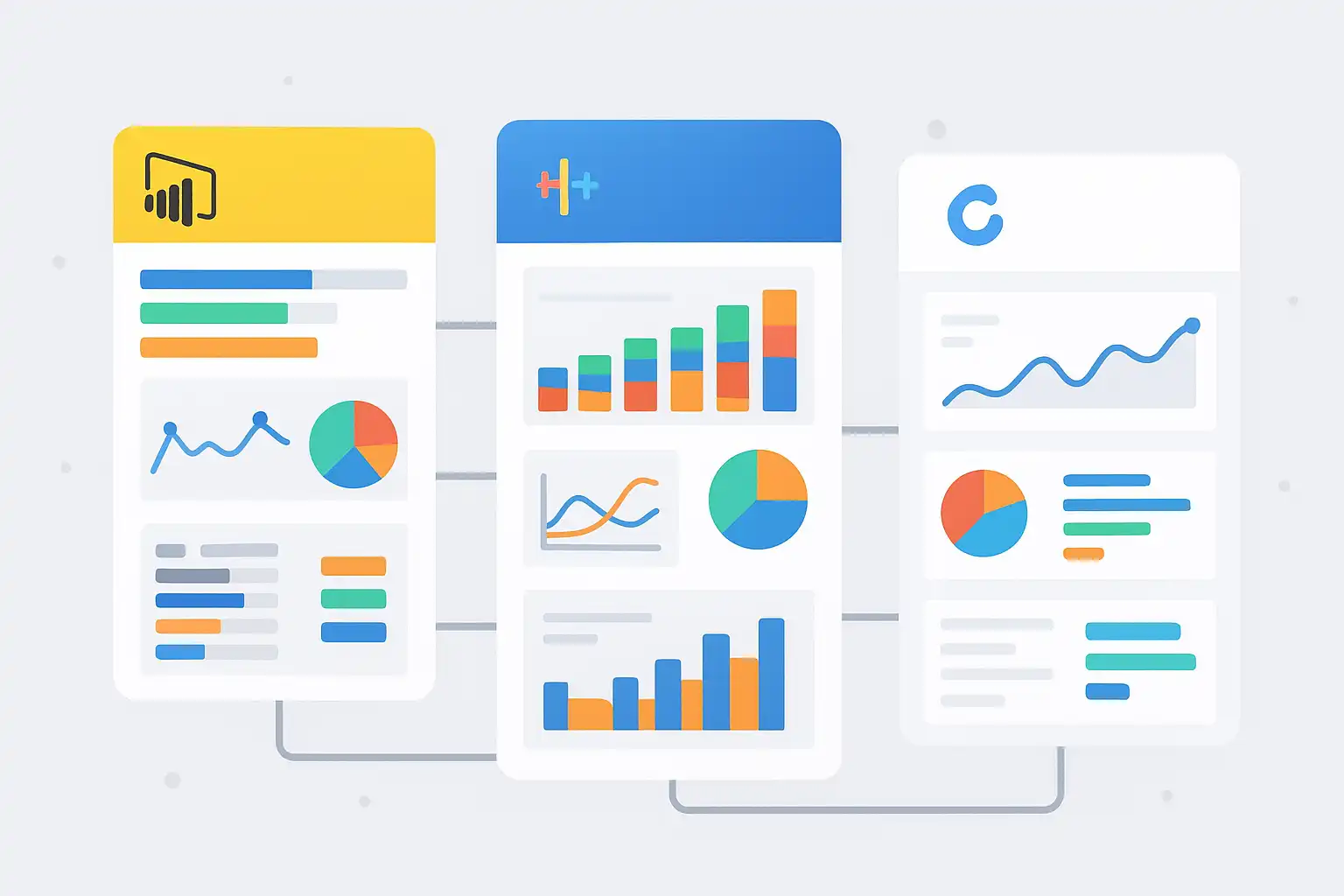
BI reporting tools for executive dashboards and board-ready metrics

BI reporting tools for executive dashboards are vital for delivering clear, real-time, and actionable insights that empower leadership teams to make informed decisions. These tools automate data integration from multiple sources, provide customizable visualizations, and ensure accurate, board-ready metrics by minimizing manual errors through validation and governance. Key features include interactive data visualization, real-time updates, predictive analytics, security controls, and flexibility tailored to various industries and leadership needs. While initial setup and integration may pose challenges, partnering with trusted BI providers can ease adoption and maximize benefits. BI dashboards transform decision-making by offering instant access to critical KPIs, enabling executives to quickly identify trends, risks, and opportunities, and pivot strategies efficiently. Popular BI solutions include self-service platforms like Tableau and Power BI, cloud-based tools, industry-specific options, and comprehensive enterprise suites. When selecting a BI tool, organizations should consider ease of use, compatibility, security, scalability, and vendor support. Ultimately, BI reporting tools enhance transparency, accelerate decision-making, and provide strategic oversight, making them indispensable for modern executive leadership.


Cloud BI platforms compared for scale, governance, and cost

This comprehensive comparison of cloud BI platforms highlights their advantages over traditional BI tools in scalability, governance, and cost-efficiency. Cloud BI connects directly to modern data warehouses like Snowflake, BigQuery, and AWS Redshift, enabling real-time insights without heavy IT infrastructure. These platforms effortlessly scale to handle massive data volumes and concurrent users through automatic resource allocation and parallel processing. Essential governance features include role-based access control, audit logs, semantic layers, data lineage, and encryption to ensure security and compliance. Pricing models favor flexibility with pay-as-you-go SaaS options ideal for small to medium businesses, while self-managed solutions offer customization for larger enterprises. Leading providers such as Microsoft Power BI, Tableau, Google Looker, and Amazon QuickSight offer unique strengths, with many incorporating AI and self-service analytics to empower users across departments. Cloud BI platforms also support collaborative, real-time reporting, fostering a data-driven culture and faster decision-making. When selecting a platform, organizations should assess use cases, data sources, governance needs, scalability, and total cost of ownership. Overall, cloud BI delivers agile, secure, and cost-effective business intelligence solutions that accelerate insights and support growth in dynamic environments.

Embedded analytics tools for SaaS products: what to prioritize

Embedded analytics tools are vital for SaaS products to enhance user engagement, streamline data interaction, and ensure scalable growth. Key priorities include seamless data integration from diverse sources, intuitive self-service dashboards, robust automation, and advanced AI/ML capabilities for predictive insights. Security is crucial, with features like row-level security, secure embedding methods, compliance with regulations (GDPR, HIPAA), and data isolation to protect sensitive information. Developer-friendly embedding options, such as APIs and JavaScript widgets, enable deep customization and multi-tenancy support. White-labeling ensures a consistent and trustworthy user experience by blending analytics seamlessly into the SaaS interface. Scalability and flexible deployment—cloud-native, hybrid, or on-premise—allow SaaS providers to meet varied client needs without sacrificing performance. Popular platforms like Looker, Tableau Embedded, Power BI Embedded, GoodData, and Sisense focus on these aspects. Prioritizing these features drives higher user retention, better decision-making, and competitive differentiation. Evaluating vendors should involve testing integration ease, security, automation, developer support, and future-proof AI capabilities. Overall, embedding the right analytics transforms SaaS products by empowering users with actionable insights, enhancing workflows, and fostering sustained business success.

Open-source BI platforms for dashboards and exploration in 2026

Open-source BI platforms in 2026 offer flexible, cost-effective solutions for creating interactive dashboards and data exploration without expensive licenses. Popular tools like Metabase, Apache Superset, Redash, KNIME, and Helical Insight provide features ranging from drag-and-drop builders to advanced scripting, supporting various data sources and scalable architectures. Compared to proprietary platforms like Power BI and Tableau, open-source BI excels in customization, transparency, and community support, though it may require more technical expertise for setup and maintenance. Key factors for selecting the right open-source BI tool include business goals, data integration, user skills, security, scalability, and total cost of ownership. These platforms increasingly support robust data governance with role-based access, audit logs, and integration with authentication systems, enhancing data trust and compliance. Organizations can maximize BI success by clear planning, building skilled teams, enforcing governance, training users, and iterating dashboards. Future trends emphasize cloud-native deployment, AI-powered analytics, improved user experience, collaborative features, and deeper governance integration. While challenges like support and user adoption exist, open-source BI continues to grow as a transparent, innovative alternative for organizations seeking control, flexibility, and cost savings in business intelligence.

The Best BI Tools for Small Businesses That Need Fast Reporting

This article highlights the best business intelligence (BI) tools tailored for small businesses needing fast, reliable reporting. Key features for efficient BI solutions include automated reporting, customizable dashboards, real-time data updates, no-code/low-code interfaces, and seamless integration with common data sources like Excel and Google Sheets. Leading BI platforms such as Microsoft Power BI, Domo, Sisense, Datapine, and Looker offer cost-effective options with scalable pricing, user-friendly designs, and strong integration capabilities. Cloud-based BI tools provide added benefits like low upfront costs, instant access, scalability, and automatic updates. When choosing a BI tool, small businesses should consider ease of use, integration, customization, support, mobile access, security, and pricing flexibility. Real-time reporting enables agile decision-making by delivering live data, alerts, and quick insights crucial for inventory, sales, and customer management. Popular BI tools vary in pros and cons but generally support non-technical users through drag-and-drop features and automated insights. Overall, modern BI solutions empower small businesses to make data-driven decisions quickly and efficiently without heavy technical expertise or large budgets.

Self Service BI Tools Comparison for Governed Analytics

This comprehensive comparison of self-service BI tools highlights the critical balance between user autonomy and data governance in governed analytics. Effective self-service BI platforms empower business users to independently explore data while embedding robust governance features such as role-based permissions, centralized data models, data lineage, and auditing. Leading tools like Power BI, Tableau, Yellowfin, and Qlik Sense offer varying strengths—from AI-driven insights and natural language queries to automated anomaly detection and standardized reporting templates. These features reduce IT bottlenecks, minimize human error, and ensure consistent, accurate analytics across organizations. AI integration enhances user experience by providing guided insights, automated data quality checks, and personalized recommendations, thereby accelerating decision-making without compromising security or compliance. Despite challenges like initial governance complexity and the risk of shadow analytics, organizations benefit from improved efficiency, data trustworthiness, and scalability. Choosing the right platform depends on aligning governance needs, user skill levels, and integration capabilities. Ultimately, modern self-service BI tools foster a data-driven culture that balances flexibility with control, driving better business outcomes through governed, reliable analytics.

Power BI vs Tableau vs Looker: Picking a Platform Based on Your Needs

Power BI, Tableau, and Looker are leading business intelligence (BI) platforms, each suited to different organizational needs. Power BI, developed by Microsoft, excels in complex data modeling, offering over 250 connectors and strong integration with Microsoft products, making it ideal for enterprises needing scalable, in-depth analytics at an affordable price. Tableau is favored for its intuitive drag-and-drop interface and superior visualization capabilities, supporting both Windows and macOS, perfect for business users and executives who prioritize visual storytelling and interactive dashboards despite higher licensing costs. Looker Studio, a web-based tool integrated with Google services, provides ease of use and rapid dashboard creation for startups and marketing teams but has limitations in data sources and advanced modeling, often requiring SQL knowledge for complex tasks. Cost-effectiveness varies: Power BI offers flexible pricing for growing teams, Tableau is more expensive but powerful for sophisticated visual analytics, and Looker Studio is mostly free but less scalable. Choosing the right BI tool depends on your industry, data complexity, team skill level, and existing tech stack. Power BI suits finance, operations, and SaaS; Tableau fits marketing and data exploration; Looker Studio works well for Google-centric digital marketing and small businesses. Successful adoption involves aligning BI tools with business goals, providing training, and considering long-term scalability and integration needs.

Business intelligence tools: how to choose the right stack for your company

Business intelligence (BI) tools transform raw data into actionable insights, enabling faster, informed decision-making across industries. Popular BI platforms include Microsoft Power BI, Tableau, Qlik Sense, and Google Data Studio, each offering features like ease of use, integration, real-time analysis, collaboration, scalability, security, and customization. Integration capabilities are crucial, as they unify data from diverse sources, reduce errors, and support real-time reporting, enhancing overall data strategy. Choosing the right BI stack depends on your business needs, user profiles, data sources, growth plans, budget, security, and compliance requirements. Successful BI implementation involves defining objectives, mapping data, evaluating options, integrating and cleaning data, designing dashboards, training users, and continuous improvement. Scalability and user adoption are essential; tools should support growth, intuitive use, collaboration, and secure access. Deployment options vary: cloud-based BI offers flexibility and scalability, on-premises ensures control and compliance, while hybrid models balance both. Real-time data analysis empowers agile responses to business changes through live data updates and alerts. The future of BI lies in AI-driven automation, smarter integration, predictive analytics, and enhanced security, making BI tools increasingly accessible and insightful. Prioritize ease of use, integration, scalability, and security to build a robust, future-proof BI stack that drives data-driven success.

What is a Business Intelligence Engineer and When Do You Need One?

A Business Intelligence (BI) Engineer is a data professional who designs, builds, and manages systems that collect, organize, and analyze company data to enable informed, data-driven decisions. They develop centralized data warehouses, ensure data accuracy and security, and create dashboards and reports for business stakeholders. BI engineers bridge the gap between technical systems and business needs by collaborating with analysts and developers, making complex data accessible and actionable. Common tools include Amazon Redshift, Snowflake, Tableau, Power BI, and cloud platforms like AWS and Azure. Companies should consider hiring a BI engineer when data becomes too complex to manage, reporting is slow or inaccurate, or during digital transformation projects such as cloud migration. Essential skills include database management, data modeling, analytics tools proficiency, data governance, system integration, and strong communication. BI engineers play a crucial role within data teams by enabling faster, more reliable insights, supporting advanced analytics, and improving decision-making confidence. While hiring a BI engineer requires investment and collaboration, the benefits include enhanced data security, compliance, automation, and competitive advantage. Small businesses can also benefit by gaining clearer data insights. Successful BI solutions depend on experienced professionals and adherence to best practices to avoid risks like insecure or incomplete systems.

What is a BI analyst and what problems do they solve?

A Business Intelligence (BI) analyst transforms raw data into actionable insights, enabling companies to make evidence-based decisions. They collect, analyze, and report on data related to sales, customers, and operations, helping businesses identify trends, solve problems, and improve efficiency. BI analysts design data collection methods, ensure data accuracy, collaborate with stakeholders, and use tools like SQL, Excel, Power BI, and Looker to create clear reports and dashboards. Their role differs from data scientists and data analysts by focusing on business context and practical recommendations for decision-makers. BI analysts are essential across industries such as retail, finance, healthcare, and manufacturing, supporting teams like marketing and operations with timely data insights. As business intelligence evolves with AI and cloud technologies, BI analysts remain crucial for interpreting complex data while adapting to new tools and ethical standards. Their skills combine technical expertise, analytical thinking, communication, and project management. Growing demand for BI analysts is driven by companies’ need to leverage advanced BI tools for competitive advantage and strategic growth.