

What Does AI Implementation Consulting Include After Strategy?
AI implementation consulting turns an approved plan into working, measurable change. After strategy, consultants help teams define priorities, prepare data, select tools, build and test solutions, guide people through adoption, and monitor results. The work is practical: it connects business goals to daily processes rather than leaving leaders with a presentation. A good engagement also manages security, bias, costs, and system failures before they become expensive problems. In short, strategy explains where AI can help; implementation consulting organizes the people, technology, governance, and continuous improvement needed to make that help real today.
What happens immediately after the AI strategy is approved?
First, consultants validate the opportunity against current conditions. They interview process owners, review repetitive work, and locate datasets that are hard to manage. They also examine customer expectations, competitor moves, regulations, budgets, and technical limits. This discovery prevents a promising idea from solving the wrong problem. For example, a service team may request a chatbot, while analysis shows that better case routing would deliver greater value. The consultant documents the baseline: current handling time, error rates, costs, revenue effects, and user experience. Everyone can then judge progress using evidence, not assumptions.
How are SMART goals and priorities set?
Next, the engagement converts broad ambition into SMART goals: specific, measurable, achievable, relevant, and time bound. A goal might be to reduce invoice exceptions by twenty percent within six months, while keeping approval accuracy above an agreed threshold. Consultants rank use cases by value, feasibility, risk, data readiness, and ownership. This creates a realistic roadmap instead of asking one model to transform everything at once. Each initiative needs an executive sponsor, a business owner, technical leads, and clear decision rights. The team records assumptions, dependencies, budget limits, and a fallback plan. Stay flexible.
Which data foundations must consultants prepare first?
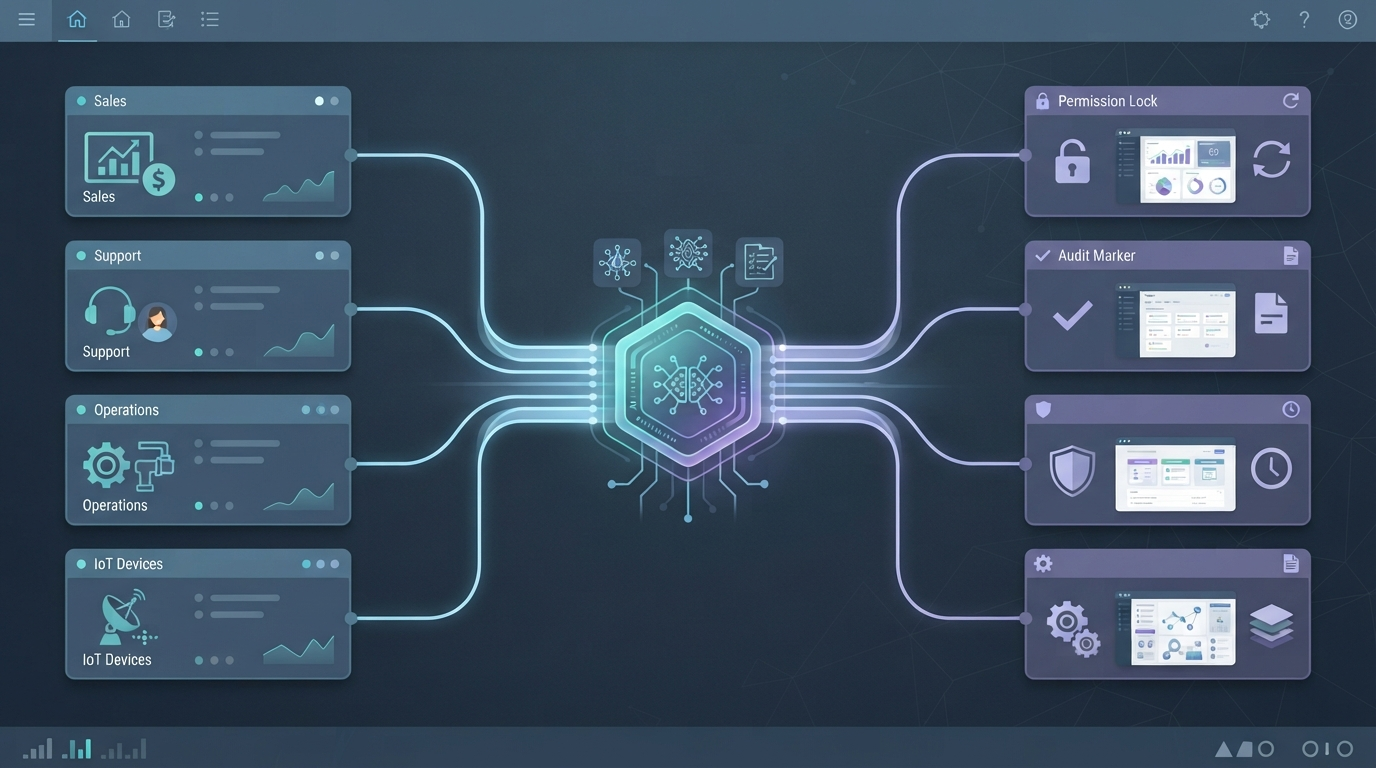
AI is only as useful as the information reaching it. Consultants map data sources, ownership, quality, access rules, and refresh timing. They identify duplicates, missing fields, inconsistent definitions, and sensitive records before those weaknesses distort an outcome. Real-time data integration for AI implementation may stream updates from sales, support, operations, or devices, so the system can respond to current events. Tools such as Striim can support streaming integration, while cloud platforms may provide storage and processing. The right tool depends on the environment. Consultants also define retention rules, permissions, audit trails. Access matters.
How do consultants choose models and technology?
Selection begins with the job, not a fashionable product. Consultants decide whether rules, forecasting, machine learning, generative AI, or a hybrid approach fits the use case. They compare build, buy, and configure options. Microsoft Azure AI, Google Cloud, AWS, and specialist vendors offer different capabilities, costs, and controls. A proof of concept can test the most uncertain assumption before a large commitment. Consultants check integration needs, response time, vendor terms, model limits, and exit options. They also set acceptance measures, such as classification accuracy or useful response rate. Prefer maintainable tools over complexity.
What governance and risk work is included?
Implementation consulting sets guardrails before software reaches real users. Teams classify sensitive data, limit access, encrypt appropriate records, and define who may approve changes. They review privacy duties, industry rules, intellectual property questions, and vendor responsibilities. Bias is also tested because skewed data or design can create unfair results. A risk register lists likely failures, their impact, warning signs, owners, and response steps. Contingency planning may include manual workflows, rollback procedures, backups, and incident communications. Governance is not paperwork for its own sake. It helps leaders move faster with confidence during major change.
How are solutions tested, deployed, and adopted?
Although methods vary, strong consultants plan testing before deployment. They define test cases for normal use, edge cases, security, performance, and failure recovery. Business users validate whether outputs are understandable and genuinely useful. Technical teams check reliability, integrations, permissions, and logging. A pilot with a limited group can reveal issues without disrupting the whole organization. Deployment is usually staged, with clear go or no-go criteria and a rollback route. Adoption matters just as much. Consultants involve stakeholders early, explain changed tasks, provide role-based training, and collect feedback. Shared ownership improves informed use daily.
What does launch support look like in practice?
Launch day is a transition, not the finish line. Consultants coordinate technical owners, business leaders, support staff, and vendors around a simple operating plan. It states who watches alerts, answers user questions, approves changes, and communicates incidents. Teams may use dashboards in Power BI, Tableau, or a cloud monitoring service to make performance visible. Support materials should cover common tasks, escalation paths, and safe use. For generative tools, employees need examples of approved prompts and reminders not to enter confidential information carelessly. Early feedback catches broken workflows before they affect many users.
Why is continuous monitoring essential after launch?
Consultants establish KPIs before launch, then monitor them against the agreed baseline. Useful measures can include predictive-model accuracy, operational cost savings, downtime reduction, revenue impact, customer lifetime value, and incident response time. The mix depends on the use case. A fraud model needs different measures from an internal knowledge assistant. Monitoring also detects data drift, meaning that live data has changed enough to weaken results. Teams investigate alerts, compare outcomes with human review, and adjust workflows or models when needed. Continuous monitoring and optimization keeps service aligned with changing goals and customer behavior.
How do consultants improve value over time?
Optimization is a business routine, not merely a technical repair. Consultants review results with owners on a regular schedule and decide which improvements deserve effort. They may tune thresholds, revise prompts, add approved data sources, simplify a handoff, or change the user interface. Each change should be tested and recorded. This avoids silent adjustments that make results impossible to explain later. As the organization learns, the roadmap can shift toward higher-value use cases. An early automation might free staff time; the next phase may improve forecasting or personalization. Scale carefully as needs change.
What should the client team own?
Consultants bring methods and outside perspective, but the client must own outcomes. Leaders supply decisions, access, budget, and visible support. Process experts explain exceptions that dashboards cannot reveal. Data owners maintain definitions and permissions. Technology teams operate the environment after handover. Consultants clarify these responsibilities in a delivery plan, often using a RACI matrix that identifies who is responsible, accountable, consulted, and informed. Regular steering meetings resolve tradeoffs quickly. Honest communication is especially important when results disappoint or a risk appears. Build an internal group able to govern, question, use, and improve AI well.
How can leaders judge consulting quality?
Good AI implementation consulting is transparent about scope, uncertainty, and tradeoffs. It does not promise that every process needs AI or that a pilot guarantees scale. Ask for a roadmap with owners, milestones, measures, risks, and estimated operating needs. Ask how data will remain current, how users will be supported, and how the team will respond when outputs degrade. A credible consultant can explain technical choices in plain language and connect each choice to a business need. They should welcome scrutiny from security, legal, operations, and frontline users. Progress toward measurable outcomes is proof.
FAQ About AI Implementation Consulting
How long does implementation usually take?
Timing depends on scope, data readiness, integration complexity, risk controls, and the number of users involved.
Is a pilot always necessary for every project?
No. A pilot is most useful when value, data quality, or technical feasibility remains uncertain. Low-risk automations may move directly through controlled testing.
Who monitors an AI system after launch?
The client normally owns daily monitoring, while consultants may provide managed support, reviews, improvements, or specialist help.
What happens when the model performs poorly?
Teams investigate data, workflows, and controls, correct, pause, or replace it.