
If you’re wondering, “should I learn data analytics or data science first?” you’re not alone. Many people feel unsure which path will be best for their goals. The short answer is: begin with data analytics if you’re new to working with data or want a gentle introduction to the field. Data analytics provides foundational knowledge and hands-on skills that make learning data science easier later. On the other hand, if you already have a strong background in math, programming, or you’re eager to dive into advanced topics like machine learning from the start, you might choose data science first. Let’s break down the roles, skills, tools, and career impact, so you can make an informed choice.
What are the main differences between data analytics and data science?
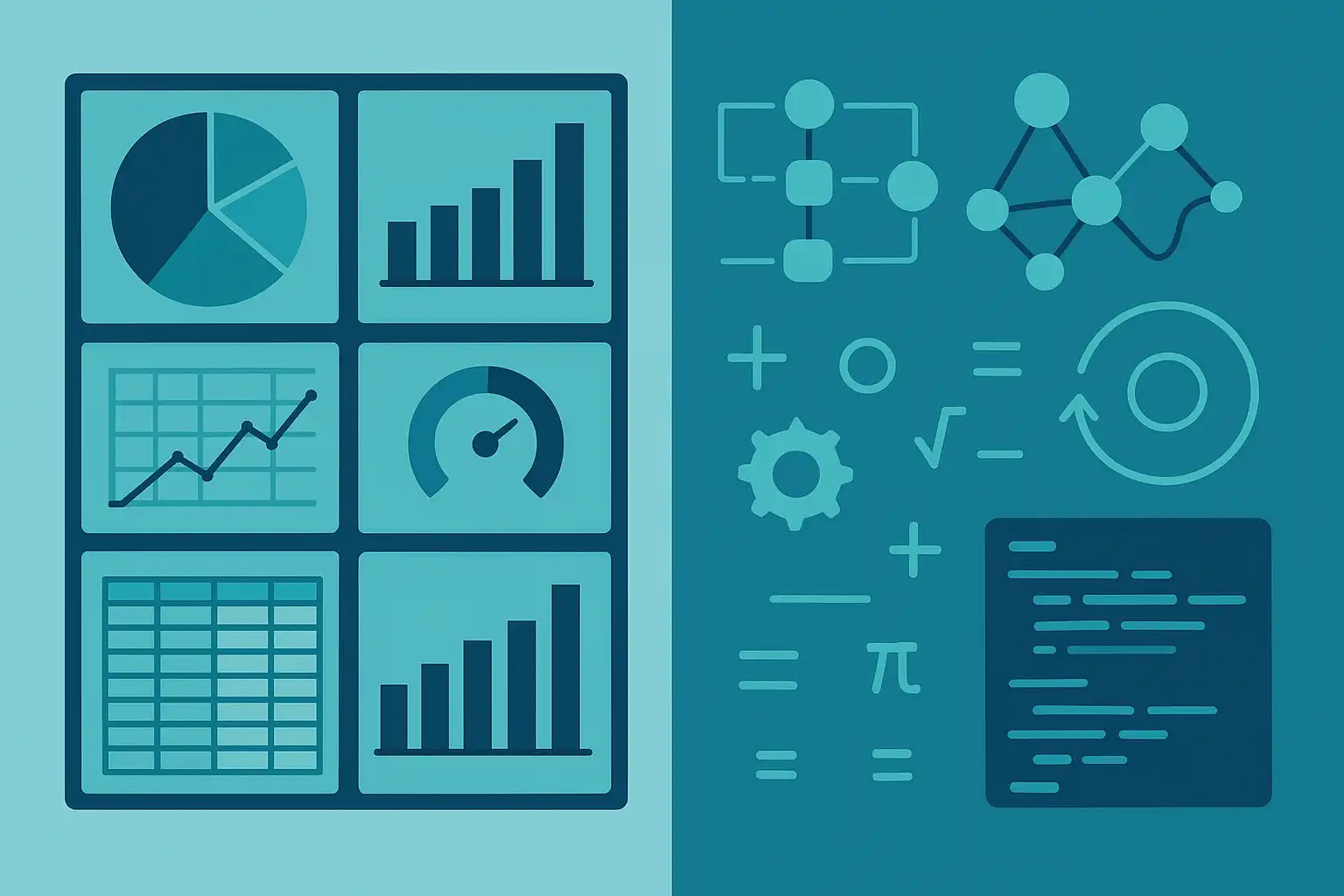
Data analytics and data science are closely related, but they serve different purposes and require different skills. Data analytics focuses on examining existing data to find patterns, trends, or answers to specific business questions. Analysts clean, organize, and visualize data, often using platforms like Tableau, QlikView, and Excel. Common tasks include creating dashboards, generating reports, and providing actionable insights for managers.
Data science, meanwhile, is a broader field. It includes everything that analysts do, but adds more advanced techniques like predictive modeling, machine learning, and working with unstructured or very large data sets. Data scientists use programming languages, such as Python and R, and big data technologies like Hadoop and Apache Spark. They build algorithms, forecast trends, and often create AI-powered solutions.
Typical tasks for each role
- Data Analyst: Gathering and cleaning data, running queries, building visualizations, generating business reports.
- Data Scientist: All analyst tasks, plus statistical modeling, training machine learning models, developing predictive algorithms, and working with large or unstructured datasets.
If you’re new to the field, data analytics is generally considered a more accessible starting point, as it requires less complex math and coding at the outset. This foundational route can make the transition to more advanced topics smoother if you later pursue data science.

Should I learn data analytics or data science for better job opportunities?
Your initial choice can shape your career pathway. By starting with data analytics, you’ll develop strong skills in problem-solving, business communication, and data visualization. These skills are highly valued in many industries. You’ll be able to:
- Work in entry-level roles such as junior analyst, business intelligence analyst, or data technician.
- Help companies improve processes, understand markets, and make evidence-based decisions.
- Gain hands-on experience with tools like Excel, SQL, and Tableau, which are widely used and sought after.
If you jump straight into data science, your career options widen further – but so does the challenge. You’ll need to master programming languages like Python or R, higher-level math, and machine learning concepts. Data science roles often ask for advanced degrees and strong technical backgrounds, but they can lead to more senior positions, such as:
- Data scientist
- Machine learning engineer
- AI specialist
- Research scientist
While choosing data science first can set you up for an ambitious career, the learning curve is steep. For most beginners, starting with data analytics offers a practical and achievable entry point. As you gain confidence, you can move up the ladder by learning new skills and transitioning into data science roles. Organizations sometimes offer team-based solutions like data science team augmentation to accelerate projects, and having analytics experience helps you fit into a variety of team settings.
What skills and tools do you need for each path?
For data analytics: Start by getting comfortable with spreadsheets, databases, and basic statistics. Most companies expect you to know how to:
- Work with data visualization tools (Tableau, Power BI, QlikView)
- Query databases using SQL
- Analyze and clean datasets
- Present findings in a clear, visual format
Many data analysts pick up basic programming (Python or R) as they advance, but it’s not always mandatory for entry-level roles.
For data science: You will need:
- Strong programming skills (Python, R, sometimes Scala or Java)
- Knowledge of advanced statistics and mathematics
- Experience with machine learning libraries (scikit-learn, TensorFlow, PyTorch)
- Ability to handle big data environments (Hadoop, Spark, AWS, Google BigQuery)
- Data wrangling for both structured and unstructured data
Because the data science field is expanding quickly, you might join a free data science bootcamp or contribute to open-source projects to build hands-on experience with these tools. Exposure to the complete data science workflow—from collecting raw data to deploying machine learning models—can also be a huge asset for your career.
Key differences in skills and tools
| Aspect | Data Analytics | Data Science |
|---|---|---|
| Focus | Interpret data, create reports | Predict outcomes, build algorithms |
| Skills | Statistics, Excel, visualization, SQL | Machine learning, programming, advanced math |
| Tools | Tableau, Power BI, Excel, SQL | Python, R, TensorFlow, Hadoop, Spark |
Which foundational knowledge is important before you start?
Whether you choose data analytics or data science, a few core concepts will help you succeed. Before starting, you should:
- Understand the data lifecycle: Learn about steps like identifying business problems, collecting data, cleaning it, exploring it visually, and interpreting results.
- Get comfortable with basic statistics: Concepts like mean, median, correlation, and probability are essential.
- Pick up some programming: Even in analytics, knowing some Python or SQL gives you an edge.
- Try basic data visualization: Use tools like Tableau or Power BI to present insights clearly.
- Learn about data strategy: Know how organizations store, manage, and secure their data.
For those interested in a detailed guide, reviewing a comprehensive data science workflow can provide practical steps and examples to understand the end-to-end process.
Is it possible to switch from data analytics to data science?
Many professionals start in data analytics and transition into data science as they gain experience. This route lets you build confidence with data, business logic, and basic tools before tackling more technical topics. Once you’re familiar with queries, reporting, and visualization, you can begin learning programming, machine learning, and advanced math in earnest.
Employers value candidates with a solid understanding of both fields, especially those who can interpret data, communicate findings, and also create predictive models when needed. So, starting in analytics doesn’t close any doors—in fact, it often opens more.
Typical learning path for career growth
- Learn data analytics basics (statistics, Excel, visualization tools)
- Gain experience with SQL and business intelligence platforms
- Start exploring Python or R for basic automation
- Take on projects with larger datasets
- Begin learning machine learning and advanced programming
- Transition to data science roles as skills mature
Many organizations offer data science service solutions that benefit from team members who understand both analytics and science, highlighting the value of a well-rounded background.
What factors should influence your choice?
When deciding, ask yourself:
- Do you prefer solving business problems and making recommendations? Data analytics suits you.
- Are you excited by algorithms, automation, and AI? Data science could be your calling.
- How strong is your math and programming background?
- Are you looking for quick entry into a new job, or do you want to invest in a long learning curve for more technical roles?
Remember, you don’t have to choose once and for all. Many professionals blend analytics and science skills over time. If you’re motivated to learn, you can always expand your expertise as your career grows.
Quick Q&A: Should I learn data analytics or data science for my goals?
1. Can I get a job with just data analytics skills?
Yes. Many companies hire data analysts for roles that focus on reporting, dashboards, and business insights. These positions are often more accessible to beginners and provide a solid foundation if you want to move toward data science later on.
2. Do I need a degree in computer science or math to start?
No. While a technical background helps, many entry-level analytics jobs accept candidates with degrees from other fields—sometimes even without a degree, especially if you can show hands-on skills and a willingness to learn.
3. How long does it take to move from analytics to science?
The timeline depends on your experience and how quickly you build up programming and machine learning skills. For many, it takes one to three years of hands-on practice and study, especially if you use structured resources or join a supportive community.
4. Are there resources to speed up learning both fields?
If you want to ramp up fast, participating in a guided program such as a free data science bootcamp can provide structured lessons, mentorship, and practical exercises. Combining this with self-study and real-world projects gives you the best shot at mastering both analytics and science.
In summary, if you’re still asking, “should I learn data analytics or data science first?”, start with analytics for a smoother and more accessible path, especially if you’re new to the field. As you grow more comfortable, you can add data science to your toolkit for even greater career opportunities. Whichever you choose, continuous learning and practical experience are the keys to long-term success in the data world.