
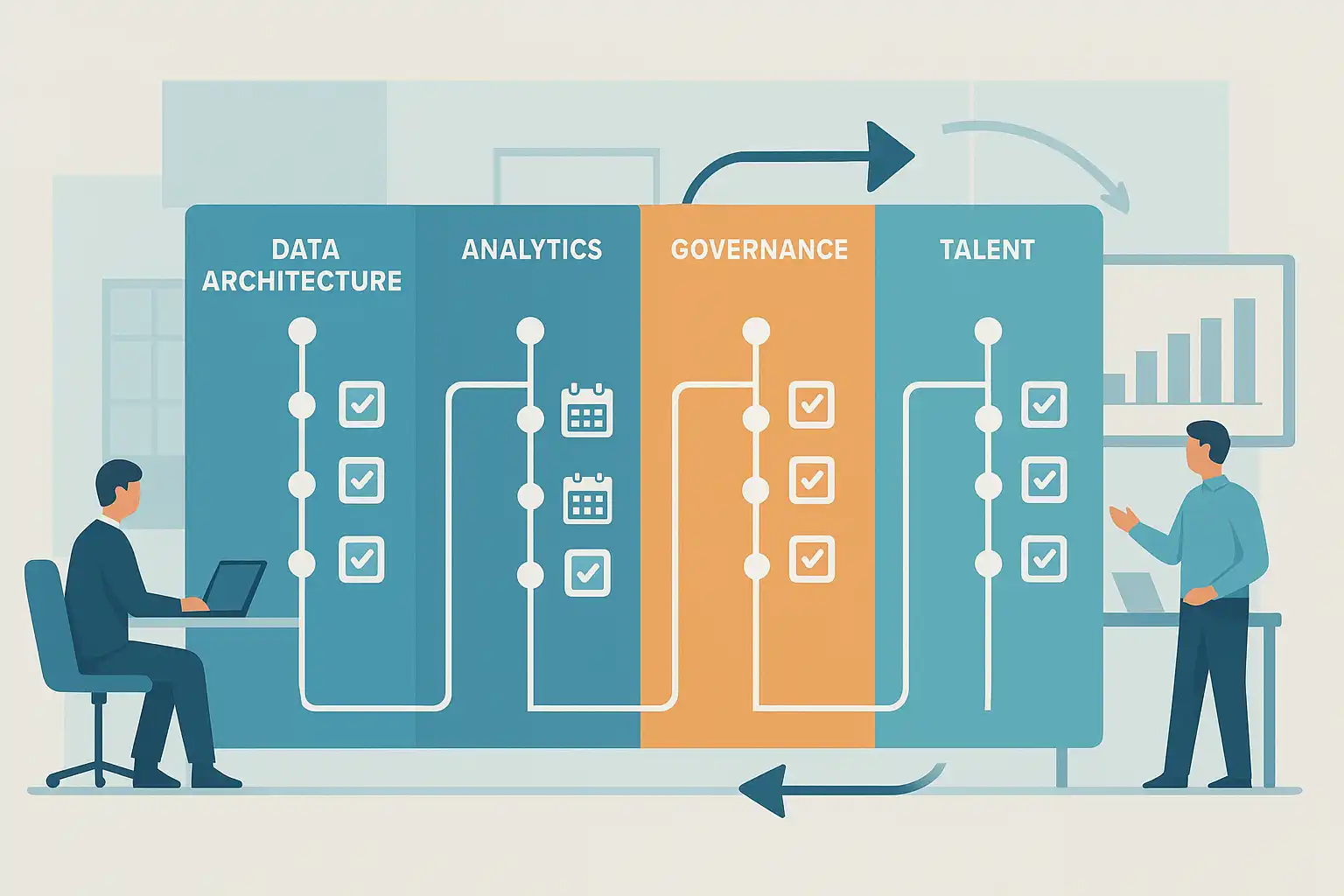
If you are searching for clear, actionable data strategy roadmap examples you can adapt, you are in the right place. A well-structured data strategy roadmap guides your team from vision to execution, ensuring efforts align with real business needs. In this article, we walk you through practical roadmap examples and show you how to customize them for your organization, regardless of size or industry. You’ll find easy-to-understand frameworks, step-by-step models, and case-based insights to help you deliver results and gain buy-in across departments.
By the end, you’ll be equipped to start building a roadmap that connects strategy to action, sets measurable milestones, and evolves as your business and data landscape change.
What Is a Data Strategy Roadmap and Why Does Your Business Need One?
At its core, a data strategy roadmap is a plan that outlines how your organization will use data to achieve its key business goals. It bridges the gap between high-level vision and daily actions, helping teams know what they need to deliver, by when, and how success will be measured. Unlike a static strategy document, a data strategy roadmap is a living artifact. It gets reviewed and adjusted as business priorities shift, new technologies become available, or as progress occurs—or stalls.
Without a roadmap, organizations often face challenges like scattered efforts, unclear roles, duplicated work, or missed opportunities to deliver value. Clear timelines, accountability, and alignment are what set apart the most effective data initiatives.

What Are the Key Elements of Effective Data Strategy Roadmap Examples?
Effective data strategy roadmap examples share several critical components. These elements ensure your roadmap is more than a list of projects—it’s a tool for business transformation. Let’s break down what you need to include:
- Clear Business Outcomes: Articulate what success looks like in specific, measurable terms. For example, “Increase customer retention by 10% using predictive analytics within 18 months.”
- Initiative Alignment: Link each data project directly to business goals, using frameworks like OKRs (Objectives and Key Results) or ROI calculations to track their impact.
- Shared Timeline and Milestones: Lay out a calendar with deliverables, dependencies, and checkpoints for each initiative. This makes progress visible and manageable.
- Ownership and Accountability: Designate executive sponsors and project leads for each major workstream. This helps secure funding and maintain focus.
- Resource Planning: Highlight required skills, staffing needs, and any training or hiring plans. This prevents bottlenecks and burnout.
- Review and Adaptation Process: Schedule quarterly roadmap reviews to adjust for business changes, new priorities, or lessons learned.
- Impact Tracking: Include metrics and KPIs (Key Performance Indicators) so you can measure adoption, business value, and course-correct as needed.
- Communication Plan: Outline how updates and progress will be shared with stakeholders across the business.
In practice, most roadmaps group initiatives around key pillars such as data architecture, data governance, analytics, AI, and talent development. By laying these out on a single page, you make it easy for executives and department heads to see at a glance where things stand and what comes next.
For example, when discussing data strategy alignment, it is crucial to show how each piece of your roadmap connects to the wider business vision, making communication and buy-in much easier to achieve.
How Do You Build a Data Strategy Roadmap? Step-by-Step Example
Building a practical data strategy roadmap doesn’t have to be overwhelming. Here’s a step-by-step approach you can adapt to your circumstances:
- Gather Stakeholder Input: Interview business leaders and key users across teams to understand pain points, desired outcomes, and top priorities.
- Prioritize Use Cases: List potential initiatives and score them based on business impact, feasibility, and alignment with strategic objectives.
- Define Success Metrics: For each priority use case, specify outcomes and how you’ll measure progress (such as increased sales, reduced costs, or improved customer satisfaction).
- Structure Initiatives: Group projects into logical categories—like data integration, analytics, or AI—and map dependencies between them.
- Set a Realistic Timeline: Assign milestones to each initiative, considering resource constraints and existing workloads.
- Assign Ownership: Choose executive champions and operational leads for accountability.
- Plan for Skills and Capacity: Identify skill gaps and plan for hiring, training, or partnering as needed.
- Draft and Share the Roadmap: Create a visual timeline or table summarizing who is responsible for what, and by when.
- Establish Review Cycles: Set a regular review rhythm—typically quarterly—to assess progress, adjust goals, or reprioritize initiatives based on new insights.
This process keeps the team focused, reduces surprises, and supports a culture of accountability.
What Are Real-World Data Strategy Roadmap Examples?
Let’s look at some actual data strategy roadmap examples you can adapt. Each example follows the above template but reflects different levels of complexity, industry needs, and organizational maturity.
Example 1: Simple 12-Month Roadmap for a Mid-Sized Retailer
| Pillar | Initiative | Milestone | Owner | Timeline | KPI |
|---|---|---|---|---|---|
| Data Architecture | Centralize customer data | Unified database live | IT Director | Q1-Q2 | 100% data in single system |
| Analytics | Launch sales dashboards | Dashboards accessible by teams | Analytics Manager | Q2-Q3 | Dashboard usage rate |
| Data Governance | Set up data quality standards | Data quality policy approved | Data Governance Lead | Q1 | Error rate reduction |
| Talent | Train staff on new tools | Everyone trained | HR Manager | Q3-Q4 | 90% training completion |
This example shows a clear focus: integrating data, building analytics, and developing staff skills—all linked to business value and with named owners to ensure follow-through.
Example 2: Advanced Roadmap for a Global Manufacturing Firm
- Q1: Interview plant managers to prioritize predictive maintenance use cases (Operations + Data Science).
- Q2: Build a proof-of-concept machine learning model (Data Science Lead).
- Q3: Integrate model into production equipment (IT + Engineering).
- Q4: Measure ROI: Reduced downtime by 15%, tracked through maintenance logs (CFO + Operations).
- Ongoing: Quarterly reviews to reprioritize or expand use cases based on results and changing business needs.
This roadmap demonstrates ongoing adaptation, close collaboration across departments, and rigorous measurement of impact. The roadmap itself is reviewed and updated quarterly, with clear milestones and KPIs that prove value to executive stakeholders.
Example 3: Industry-Specific Data Strategy Roadmap for Healthcare
For healthcare providers, regulatory compliance and data privacy are top concerns. A typical roadmap might include:
- Implementing data governance frameworks to ensure HIPAA compliance
- Rolling out self-service analytics for clinicians to improve patient care
- Establishing regular training on data privacy protocols
- Tracking adoption rates and reductions in data errors as key KPIs
Industry-specific data strategy roadmaps like this one are tailored to sector challenges—here, ensuring safe and effective use of sensitive information while driving better outcomes for patients.
If you are looking to create your own roadmap, a resource like Data Strategy Roadmap Template is a smart starting point, helping you structure your work according to best practices.

How Can Different Industries Tailor Data Strategy Roadmap Examples?
No two sectors are exactly alike, so it’s crucial to align your roadmap to your industry’s realities. Here’s how organizations adapt data strategy roadmap examples to fit their needs:
- Regulatory Environment: Financial services, healthcare, and government often prioritize compliance and security, building these as pillars in their roadmaps.
- Customer Focus: Retailers and online businesses may center on customer analytics, churn prediction, or personalization projects.
- Operational Efficiency: Manufacturers often leverage predictive analytics for equipment and supply chain optimization.
- Public Sector: Government agencies balance transparency, security, and public value—drawing on elements from sources like the federal data strategy to guide their roadmaps.
Tailoring your approach means choosing the right use cases, mapping the business impact, and ensuring that staffing and skills planning are realistic for your environment. Custom review cycles and change management plans help keep things on track when market conditions shift.
Table: Industry Pillars and Roadmap Focus
| Industry | Main Roadmap Pillars | Sample KPI |
|---|---|---|
| Finance | Risk analytics, compliance, fraud detection, customer data | Reduced compliance incidents |
| Retail | Personalization, inventory analytics, sales dashboards | Increased basket size |
| Manufacturing | Predictive maintenance, supply chain analytics | Reduced equipment downtime |
| Healthcare | Data governance, patient analytics, privacy training | Data breach incidents |
| Government | Transparency, citizen analytics, security | Public data usage |
This mapping helps you quickly identify which pillars to prioritize based on your sector and what metrics matter most for tracking progress.
What Are the Best Practices for Adapting Data Strategy Roadmap Examples?
While every business’s data journey is unique, certain adaptive best practices make any roadmap more effective:
- Start Lean, Scale Fast: Launch with 1-2 high-impact use cases. Prove value quickly before investing in broader initiatives.
- Involve Stakeholders Early: Bring executives, IT, and business users together from the start. This creates shared ownership and smoother implementation.
- Show Quick Wins: Identify projects that deliver visible results within a few months—such as a daily sales dashboard—then build momentum for tougher, longer-term work.
- Keep Roadmaps Flexible: Treat the roadmap as a living plan. Adjust it quarterly to reflect new business insights, tech changes, or shifting priorities.
- Track Both Adoption and Business Results: Monitor not only if tools were built but also whether they are used and drive the intended outcomes.
- Address Skills and Capacity: Plan up front for any gaps in analytics, engineering, or domain expertise. Consider training or hiring to fill these needs.
- Communicate Often: Share progress updates widely—use visuals, dashboards, and regular meetings to celebrate success and surface challenges early.
When applying adaptive data strategy roadmap best practices, remember to document lessons learned. This ensures your roadmap gets better with each cycle and remains aligned with your evolving goals.
How Can You Measure the Success of Your Data Strategy Roadmap?
Success is not just delivering projects on time—it’s about driving measurable business impact. Here are proven ways to track performance:
- Business KPIs: Connect initiatives to metrics like increased revenue, reduced costs, or improved customer satisfaction.
- Adoption Metrics: Track how quickly and widely new tools or insights are used by business teams.
- Milestone Completion: Measure progress against your mapped timeline for each project.
- Feedback Loops: Run surveys or feedback sessions with users and stakeholders to identify pain points and gather ideas for improvements.
- ROI Tracking: Estimate direct and indirect returns from data investments, comparing costs to realized or projected benefits.
Continuous measurement and open communication help you not only prove value but also refine your roadmap over time.
FAQ
What are essential components to include in a data strategy roadmap?
Every strong data strategy roadmap should include clear business objectives, a list of prioritized initiatives with deliverables and deadlines, named owners for accountability, defined resources and skills needed, measurable KPIs, and a process for ongoing review and adaptation. This structure allows you to track progress, make adjustments, and keep everyone aligned on shared goals.
How often should a data strategy roadmap be updated?
Most organizations update their data strategy roadmaps on a quarterly basis. Quarterly reviews are effective because they let teams respond to changes in business needs, technology, or staffing. If there’s a major shift in company strategy or an unexpected barrier, it’s worth reviewing immediately so the roadmap always reflects your current priorities.
Can I use a standard data strategy roadmap template for my organization?
You can absolutely start with a standard data strategy roadmap template, but it’s important to tailor it to your business objectives, industry challenges, and resource realities. A template provides structure, but your priorities and KPIs should match what matters most to your company and sector.
What are common pitfalls to avoid when creating a data strategy roadmap?
Common mistakes include setting vague goals, failing to secure executive sponsorship, underestimating data quality issues, ignoring stakeholder input, and not planning for skills gaps. Regular reviews and clear ownership help avoid these issues and keep your roadmap on track as a living, valuable tool.