
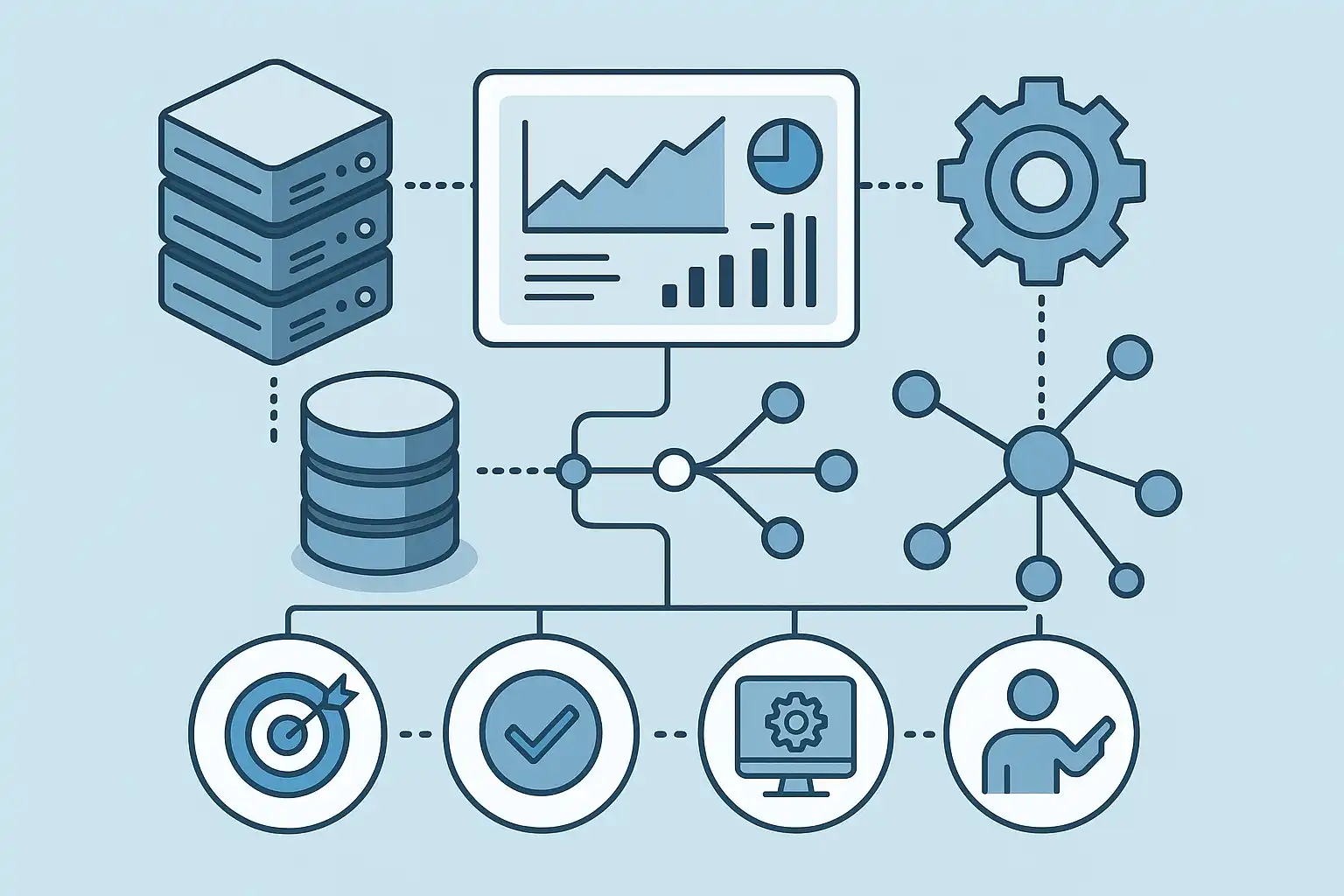
Business intelligence implementation factors are the building blocks for any company hoping to turn raw data into real business advantage. Success depends on more than just picking a software tool or storing information in a database. The truth is, getting business intelligence (BI) right means paying attention to how you set goals, prepare your data, involve your people, choose technology, and measure results. In this article, you’ll find clear answers to the most important questions about business intelligence implementation factors—right from the start.
What are the essential business intelligence implementation factors?
Implementing business intelligence is a journey, not a single event. Companies that succeed focus carefully on a range of critical factors. The most essential business intelligence implementation factors include clear goal setting, thorough requirements gathering, choosing the right technology and tools, ensuring data quality, engaging stakeholders, investing in user training, maintaining strong leadership support, and building a culture committed to data-driven decision-making.
One practical example comes from retailers who first define what they want to achieve—such as higher sales conversion or reduced churn—before diving into BI tools. This clarity helps them align the later steps in their BI journey, from data collection to dashboard design and performance tracking.
Why clear goals and vision matter
Before you start collecting data or designing dashboards, you need to know exactly what you want to accomplish with business intelligence. Companies that define specific objectives—like improving customer engagement, reducing costs, or making supply chains more efficient—get better results than those with only a vague idea of “using data.” Goals set the direction for every BI decision to follow.
The importance of business requirement analysis
After setting high-level goals, the next step is understanding what different users across your organization actually need. This might mean listening to sales managers, marketers, finance teams, or warehouse staff to gather feedback on what insights would help them do their jobs better. The business requirements define which data to collect, which reports to build, and how success will be measured.
Stakeholder engagement and leadership
Every successful BI implementation has leaders who champion the project and teams who support the change. Leadership sets priorities, allocates resources, and keeps motivation high. At the same time, effective engagement means involving front-line users early and listening to their concerns. Without buy-in from both leaders and everyday users, adoption can stall, as people revert to their old ways of working.
In fact, many organizations find that creating a steering committee or regular project meetings helps keep everyone aligned. Leaders who communicate the benefits of BI—and how it helps achieve business goals—are more likely to see successful outcomes.

How do technology and data quality impact business intelligence success?
Technology forms the backbone of any BI initiative. Choosing the right platform, ensuring seamless data integration, maintaining data quality, and investing in scalable solutions are among the most important technology-focused business intelligence implementation factors.
Choosing a suitable BI platform
There’s no one-size-fits-all BI tool. Companies should weigh factors like ease of use, scalability, vendor support, integration capability, and cost. Well-known BI platforms include Microsoft Power BI, Tableau, Qlik, and SAP BusinessObjects. Cloud-based platforms can offer flexibility and speed, while on-premises solutions might be required for data security in certain industries.
Integration and data sources
Modern companies generate data from dozens of sources—websites, CRM systems, financial software, IoT devices, and more. Seamless data integration is critical for seeing the full business picture. Using advanced extract, transform, and load (ETL) processes, teams can bring disparate information into a single, accurate view.
For those evaluating solution providers, it’s wise to consult guides about trusted BI providers to make sure integrations are robust and future-proof.
Data quality management
Even the best BI software can’t deliver accurate insights if the data it analyzes is flawed. Data quality issues—such as duplicates, missing values, or inconsistencies—can mislead decision-makers. Teams must set up processes for data cleansing, validation, and monitoring. Investing in robust data governance ensures that data definitions, access controls, and privacy rules are clear and enforced.
Building strong data warehousing foundations
A well-designed data warehouse stores and organizes information from different systems in a consistent, reliable way. This makes it easier to generate reports, analyze trends, and create dashboards. Data warehouses should be built to scale as data volumes and business needs grow.
Visualization and dashboard creation tools
Visualization tools transform complex data sets into clear charts, graphs, and dashboards. Visuals help users spot trends, compare metrics, and understand performance quickly. Easy-to-use dashboards encourage adoption of BI tools by all types of users, not just data scientists. Examples include self-serve tools that let managers filter and drill down into metrics without IT help.
What are the key stages of implementing business intelligence?
A successful business intelligence rollout is systematic and follows a series of well-defined steps. Understanding these stages helps organizations plan, track progress, and spot potential roadblocks early.
- Defining goals: Pinpoint what you hope to achieve with BI, such as increasing sales, cutting costs, or enhancing customer satisfaction.
- Gathering data: Identify and collect data from all relevant sources (internal and external).
- Understanding business requirements: Consult stakeholders to clarify analytics needs and reporting formats.
- Setting key performance indicators (KPIs): Choose measurable metrics that reflect progress toward your goals.
- Data modeling: Organize and structure data to make it usable and meaningful.
- Creating dashboards and visualizations: Develop interactive charts and reports to make insights actionable.
- Validation and testing: Verify that outputs are reliable, accurate, and relevant.
- Launching BI solutions: Roll out tools and dashboards to users across the organization.
- Monitoring and improvement: Track usage, gather feedback, and tweak systems as needed.
- Expanding and scaling: Grow BI capabilities as the organization’s needs and data volumes increase.
For a deeper look at how each of these steps fit together strategically, exploring resources like Business Intelligence Capabilities and Implementation Strategies can help organizations build strong foundations that support long-term growth.
Validation and testing explained
Before a BI system goes live, it must be tested for accuracy and reliability. This includes verifying that data flows correctly, calculations are right, and dashboards display up-to-date information. Testing also helps ensure that user permissions and security controls work as intended, protecting sensitive data from misuse.
How do organizational culture and leadership affect BI adoption?
Organizational culture and leadership are often overlooked but are among the most influential business intelligence implementation factors. Companies with strong, supportive leadership and a culture open to change typically see faster adoption and real business impact from BI projects.
The role of leadership commitment
Leaders set the tone for the whole organization. When company executives actively promote BI, participate in training, and use dashboards themselves, others are inspired to follow. Conversely, lack of visible support can make teams skeptical, slowing adoption and limiting the benefits of BI investments.
Building a data-driven culture
A data-driven culture encourages employees to question assumptions, use evidence to make decisions, and continuously seek improvement. Training programs, regular communication about BI benefits, and recognizing employees who use data effectively help reinforce positive behaviors.
Some companies even create internal communities of practice, where users share tips, troubleshoot challenges, and celebrate successes. This fosters ongoing learning and improvement.
In companies that prize innovation, BI adoption usually happens more quickly. Teams are willing to experiment, iterate, and learn from mistakes. This mindset is especially important when rolling out advanced analytics or AI business intelligence which may require new skills.

What challenges commonly derail business intelligence projects?
Even with careful planning, companies often face obstacles during BI implementation. Understanding these challenges—and the solutions—can prevent wasted time and resources.
- Data quality issues: Inconsistent, outdated, or duplicate data can undermine trust in BI insights.
- Poor stakeholder engagement: If users aren’t involved, solutions may not meet real business needs, leading to low adoption.
- Complex or unfriendly tools: Complicated interfaces discourage users and limit value.
- Lack of clear strategy: Without a roadmap, BI projects can drift or fail to deliver expected results.
- Inadequate training: Users who don’t understand BI tools may ignore them.
- Insufficient leadership support: Projects lose momentum without visible executive backing.
- Expertise shortages: Lack of skilled BI professionals slows progress, especially for complex deployments.
- Integration difficulties: Technical obstacles in combining diverse data sources can delay launches.
- Scalability limitations: BI systems that don’t grow with business needs become obsolete quickly.
Solutions to common BI challenges
Addressing these issues requires a proactive approach. Regular data audits help maintain quality. Involving users early and often boosts buy-in and generates practical ideas. Choosing user-friendly tools and providing ongoing training supports adoption. Finally, committed leadership keeps BI projects on track and aligned with business goals.
Which technological factors should companies consider for effective BI implementation?
Technological decisions shape both the short- and long-term success of BI initiatives. The following factors are particularly important when evaluating and deploying business intelligence solutions.
- Integration capabilities: BI tools must connect to diverse data sources easily and reliably.
- Data quality management: Built-in features for data cleansing, validation, and monitoring are crucial.
- Data warehousing and governance: Secure, scalable storage solutions with clear data policies reduce risks.
- Visualization tools: Intuitive dashboards and charting functions improve user adoption.
- Testing and validation technologies: Automated testing ensures outputs stay accurate as systems grow.
- Advanced analytics: Support for predictive analytics and machine learning adds significant value.
- Security and compliance: Data protection and privacy must be built in, especially for regulated industries.
- Scalability and flexibility: BI systems should accommodate growth in users and data without performance loss.
Many organizations partner with experts to select and configure BI technology. When evaluating performance and service options, reading about Business Intelligence offerings helps ensure technology aligns with business objectives.
What role does user training play in BI success?
No BI project can succeed unless people know how to use the tools and feel confident doing so. Comprehensive training, delivered in accessible formats, is a cornerstone business intelligence implementation factor. This training should go beyond technical instruction to include practical, real-world scenarios relevant to each user group.
Types of BI training
Effective programs mix instructor-led workshops, online tutorials, interactive guides, and peer-to-peer support. Ongoing refreshers keep skills sharp and encourage adoption of new features as BI platforms evolve.
Measuring training effectiveness
Companies can gauge success by tracking user engagement, measuring report usage, and soliciting feedback. Higher participation in BI training often correlates with better business outcomes and higher ROI on analytics investments.
How do organizations measure the impact of business intelligence?
Measuring the impact of BI requires both quantitative and qualitative approaches. Key performance indicators (KPIs) track changes in sales, cost reductions, process improvements, or customer satisfaction. Companies also look at BI adoption rates, frequency of dashboard use, and feedback from users on how BI tools affect their daily work.
For example, a retailer implementing BI might set KPIs like “reduce customer churn by 10%” or “increase average transaction value.” Regular reviews of these metrics show whether the BI system is delivering on its promises.
Continuous improvement: the final factor
Business intelligence is not a one-time project. Ongoing monitoring, user feedback, and incremental upgrades keep systems relevant as business needs change. Organizations that embrace continuous improvement refine their BI systems over time, adding new data sources, updating dashboards, and embracing new analytics capabilities.
Frequently Asked Questions (FAQ)
What’s the difference between business intelligence and business analytics?
Business intelligence focuses on gathering, organizing, and visualizing historical data to support decision-making. Business analytics goes a step further, applying statistical and predictive techniques to forecast future trends or identify patterns in data. While both help companies leverage data, BI is about understanding the past and present, whereas analytics explores what might happen in the future.
Can small businesses benefit from BI, or is it just for large organizations?
BI tools are now more affordable and accessible than ever, so small businesses can absolutely benefit. Even simple dashboards can help smaller firms track sales, spot trends, and respond quickly to market changes. Starting with clear goals and focusing on must-have insights ensures a positive return on investment for businesses of any size.
How long does it typically take to implement a business intelligence solution?
Implementation timelines vary based on company size, data complexity, and scope. A basic BI dashboard for a small business might be set up in weeks. Larger, enterprise-wide systems often require several months, especially when integrating multiple data sources and automating reporting. Clear planning and stepwise rollout help speed the process and manage expectations.
How can organizations keep their BI systems relevant as technology evolves?
Regular reviews, listening to user feedback, updating tools, and adopting new features—such as machine learning or AI—help organizations keep BI systems effective. Building flexibility into BI infrastructure means companies can scale, adapt new data sources, and embrace emerging analytics methods as their needs grow.