AI Integration for Companies to Modernize Workflows

AI integration is revolutionizing company workflows by automating routine tasks, reducing errors, and accelerating service delivery across industries like finance, healthcare, retail, and logistics. Utilizing low-code platforms such as Decisions.com enables businesses to deploy AI-driven automation without extensive technical expertise, transforming manual processes into efficient, intelligent workflows. Key AI tools include Robotic Process Automation (RPA), machine learning, natural language processing (NLP), and process mining, all enhancing decision-making and operational agility. Successful AI adoption involves identifying critical processes, setting clear goals, choosing compatible tools, integrating with existing systems, and continuous monitoring and improvement. Challenges like legacy system compatibility, data quality, employee resistance, and compliance require strategic planning and training to overcome. Treating AI integration as an ongoing journey fosters innovation, boosts productivity, and drives customer satisfaction. Scalable AI solutions are accessible to businesses of all sizes, enabling faster processing, cost savings, and improved outcomes. This modern approach empowers employees to focus on higher-value tasks, increasing engagement and supporting sustainable growth.

Understanding the Data Support Engineer Job Description and Key Skills

A data support engineer ensures the reliability and efficiency of an organization’s data infrastructure by troubleshooting databases, pipelines, and data systems. Key responsibilities include diagnosing issues, incident response, monitoring systems, maintaining software, documenting procedures, and supporting users. These professionals serve as a bridge between IT, data teams, and end-users, playing a vital role in preventing downtime and ensuring smooth data flow. Essential skills for success include technical troubleshooting, proficiency in SQL and databases, scripting (Python, Shell), familiarity with cloud platforms (AWS, Azure, Google Cloud), monitoring tools, strong communication, teamwork, and attention to detail. A bachelor’s degree in computer science or related fields and certifications like CompTIA Data+, Microsoft Azure Data Engineer, or AWS Certified Data Analytics enhance career prospects. Data support engineers work across various industries such as tech, finance, healthcare, and retail, using tools like MySQL, PostgreSQL, Talend, Prometheus, and Jira. The role offers career growth into senior support, data engineering, or cloud roles and is highly demanded due to increasing reliance on data. While rewarding, the job can be fast-paced and stressful, requiring adaptability and calm under pressure. Unlike data engineers who build pipelines, data support engineers focus on maintaining and troubleshooting existing systems to ensure seamless data operations.

Automated Services Examples Across Industries: Practical Use Cases and Benefits

Automated services leverage AI, software, and machines to streamline repetitive tasks across industries, enhancing efficiency, accuracy, and productivity. Key sectors benefiting include finance, healthcare, manufacturing, education, energy, construction, and pharma. Examples range from AI-driven fraud detection in finance to automated patient scheduling in healthcare and robotic assembly in manufacturing. Automation accelerates data handling, reduces errors, ensures compliance, enables real-time reporting, and optimizes resources. Despite challenges like user resistance, data quality issues, and integration complexity, solutions such as staff training, data cleansing, and no-code platforms facilitate smooth adoption and scalability. Automation primarily targets routine, rule-based tasks, allowing employees to focus on creative, judgment-intensive work without replacing jobs. Both large enterprises and SMEs can implement scalable, cloud-based automated solutions tailored to their needs. Overall, automation significantly cuts costs, speeds approvals, improves compliance, and delivers actionable insights, driving competitive advantage across diverse industries.

Cloud Based Data Analytics for Real-Time Insights: How Businesses Gain Instant Clarity

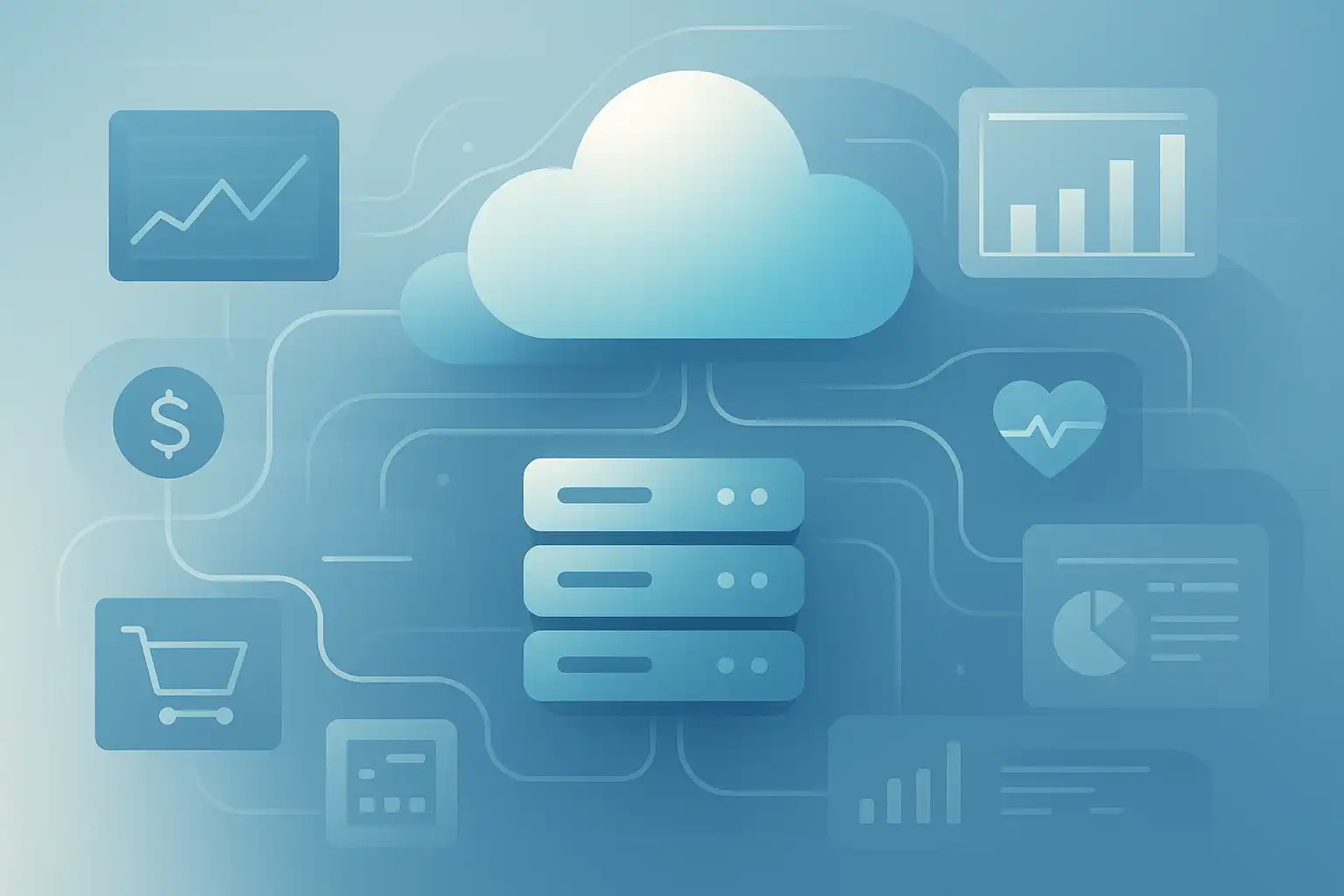
Cloud-based data analytics revolutionizes real-time decision-making by enabling businesses to collect, process, and visualize data instantly via scalable cloud platforms like AWS, Google Cloud, and Microsoft Azure. This approach replaces traditional on-premises systems, offering faster insights, cost savings, and enhanced security. Key industries benefiting include SaaS, finance, retail, healthcare, and manufacturing, where immediate data access drives timely actions and improved outcomes. Cloud analytics platforms provide secure data storage, powerful processing tools, AI-driven forecasting, and user-friendly dashboards, supporting agile business needs and multi-tenant environments. Real-time analytics empower organizations to monitor trends, detect anomalies, and automate responses, enhancing operational efficiency and customer engagement. Despite challenges like data privacy and system integration, leading providers offer robust solutions to ensure compliance and data quality. Cloud analytics also facilitates collaboration across teams globally, with automatic scaling adjusting resources on demand. Small businesses benefit from pay-as-you-go models, gaining enterprise-level insights without heavy upfront costs. Overall, cloud-based data analytics transforms how enterprises harness data for predictive and prescriptive intelligence, enabling faster, smarter, and more secure business decisions in a competitive digital landscape.

Image Classification Solutions for Accurate Vision AI

Image classification solutions are vital for developing accurate vision AI systems across industries such as healthcare, automotive, retail, and manufacturing. These solutions leverage advanced models like Convolutional Neural Networks (CNNs) and Vision Transformers (ViTs) to analyze images, detect objects, and enable real-time decision-making. Effective image classification depends on high-quality data preprocessing, including resizing, normalization, and augmentation, as well as model training techniques like transfer learning and hyperparameter tuning. Key challenges include limited labeled data, privacy concerns, and balancing model complexity with deployment constraints, especially on edge devices. Best practices emphasize clean, diverse datasets, continuous model monitoring, and regular updates to maintain accuracy. Current trends focus on self-supervised learning, edge computing, and explainable AI to enhance performance and trustworthiness. Popular tools and platforms like TensorFlow, PyTorch, Google Cloud Vision, and OpenCV support rapid development and deployment. Ultimately, customized AI development and expert consultation can accelerate innovation and ensure tailored solutions for specific industry needs, delivering improved efficiency, safety, and insights through precise image classification.

Driving Innovation with Data Science R&D Services

Data science R&D services drive innovation by combining advanced research with practical data applications to solve complex business challenges. Unlike traditional analytics, these services focus on experimentation, prototype development, and custom algorithm creation to predict trends, automate processes, and discover new market opportunities. Typical projects involve defining problems, collecting data, researching, prototyping, testing, iterating, and deploying scalable solutions. Industries such as healthcare, finance, retail, manufacturing, and logistics benefit from tailored innovations like disease prediction models, fraud detection, personalized recommendations, and supply chain optimization. R&D teams utilize tools like Python, R, TensorFlow, and cloud platforms to build and scale solutions. Investing in data science R&D offers advantages over off-the-shelf tools by providing customized, proprietary technologies that adapt quickly to market changes. Challenges include accessing quality data, aligning goals with business needs, and managing resource demands. Building successful R&D teams requires diverse expertise and sometimes external augmentation for fresh insights. Both large and small businesses can leverage data science R&D to gain competitive advantages through smarter decision-making and innovative product development. Clear project goals and performance metrics are essential to measure success and maximize ROI.

How Healthcare Data Solutions Improve Patient Outcomes

Healthcare data solutions transform patient care by collecting, organizing, and analyzing clinical and operational data to improve outcomes. These systems enable early detection of complications, identify care gaps, and use predictive analytics to forecast risks like hospital readmissions. Key components include data collection from multiple sources, structuring unorganized notes, predictive modeling, pathway analysis, and real-time alerts, all designed to unify fragmented information for timely, personalized treatment. Integration with existing hospital systems often involves natural language processing and advanced analytics to monitor patient progress and optimize resources. Popular tools include EHR platforms like Cerner and Epic, analytics software such as Tableau, and cloud services like AWS for scalable data management. Benefits include enhanced patient safety, faster decisions, and resource efficiency, while challenges involve integration costs, data privacy, and staff training. Predictive analytics reduce readmissions by identifying high-risk patients early, supporting proactive care. Privacy is safeguarded through encryption, compliance with standards like HIPAA, and controlled access. The future of healthcare data solutions lies in AI-driven, real-time monitoring and personalized care, aiming to prevent illness and improve healthcare accessibility and effectiveness worldwide.

Data Compliance and Security Services (DCS) You Can Trust

Data Compliance and Security Services (DCS) are essential for protecting sensitive information, ensuring regulatory compliance, and building customer trust. Reliable DCS providers offer tools like data classification, secure access, flexible IT infrastructure, disaster recovery, and modern digital solutions that surpass traditional methods. These services help businesses comply with laws such as GDPR, HIPAA, PCI-DSS, and SOX by organizing data, maintaining detailed audit trails, and managing user consent effectively. Best practices for selecting DCS providers include prioritizing modern security, thorough record-keeping, customer privacy controls, and experienced vendors. DCS aids businesses in maintaining customer trust through transparency, unified data profiles, and appointing compliance leaders. Failure to adopt robust DCS can lead to fines, data breaches, lost trust, and operational downtime. Unlike outdated paper-based or manual systems, DCS platforms use cloud storage, encryption, real-time monitoring, and automated alerts to enhance security and compliance efficiency. Regular audits supported by DCS verify adherence to regulations, uncover vulnerabilities, and prepare organizations for inspections. Integration with business software and guided transitions from traditional systems make DCS practical and effective. Overall, investing in trustworthy data compliance and security services is crucial for safeguarding data, meeting legal requirements, and sustaining competitive advantage in today’s digital landscape.

Data Analytics Tools for Small Business That Drive Growth

Data analytics tools are essential for small businesses aiming to drive growth by identifying trends, understanding customers, and making informed decisions. Affordable and user-friendly options like Power BI, Tableau, Looker Studio, and Google Analytics enable businesses to visualize sales, marketing, and customer data without requiring technical expertise. For predictive insights, tools such as RapidMiner and KNIME offer no-code workflows to forecast trends and sales. Tech-savvy teams can leverage programming languages like Python, R, and SQL for customized, advanced analysis. Integration with existing systems like CRM, spreadsheets, and websites ensures seamless data flow and real-time updates, enhancing collaboration and decision-making. Key features to prioritize include ease of use, integration capabilities, real-time data, powerful visualization, collaboration, and customization. Starting small with simple dashboards and gradually expanding analytics use is recommended. Analytics help small businesses uncover growth opportunities by combining multiple data sources to optimize marketing, inventory, and customer strategies. Many tools offer free or affordable plans, making data-driven growth accessible. Avoid overly complex tools and ensure data privacy and access control. Overall, tailored data analytics empower small businesses to compete effectively by making smarter, faster decisions based on actionable insights.

Public Data for Analysis: Best Sources and Tips

This article explores the best sources and practical tips for using public data in analysis. Reliable public data primarily comes from official government websites with domains like .gov or .mil, including platforms such as data.gov, UN Data Portal, World Bank, and regional portals like Canada’s Open Government. Public data spans diverse fields—demographics, economy, health, environment, education, and transportation—offering valuable insights for students, professionals, and researchers. Proper data preparation, or cleaning, is essential to ensure accuracy by addressing errors, missing values, and formatting inconsistencies, using tools like Excel, Python, or R. Ethical and legal considerations are critical: users must verify sources, respect privacy, follow usage policies, and credit data providers. Despite challenges like quality variance and required cleaning, public data remains a cost-effective resource supporting transparency, research, and decision-making. To maximize benefits, define clear questions, select trustworthy datasets, document workflows, and share results responsibly. Continuous learning and automation can enhance analysis efficiency. This guide emphasizes curiosity, ethical handling, and transparency to build trust and unlock the full potential of public data for varied analytical projects.