
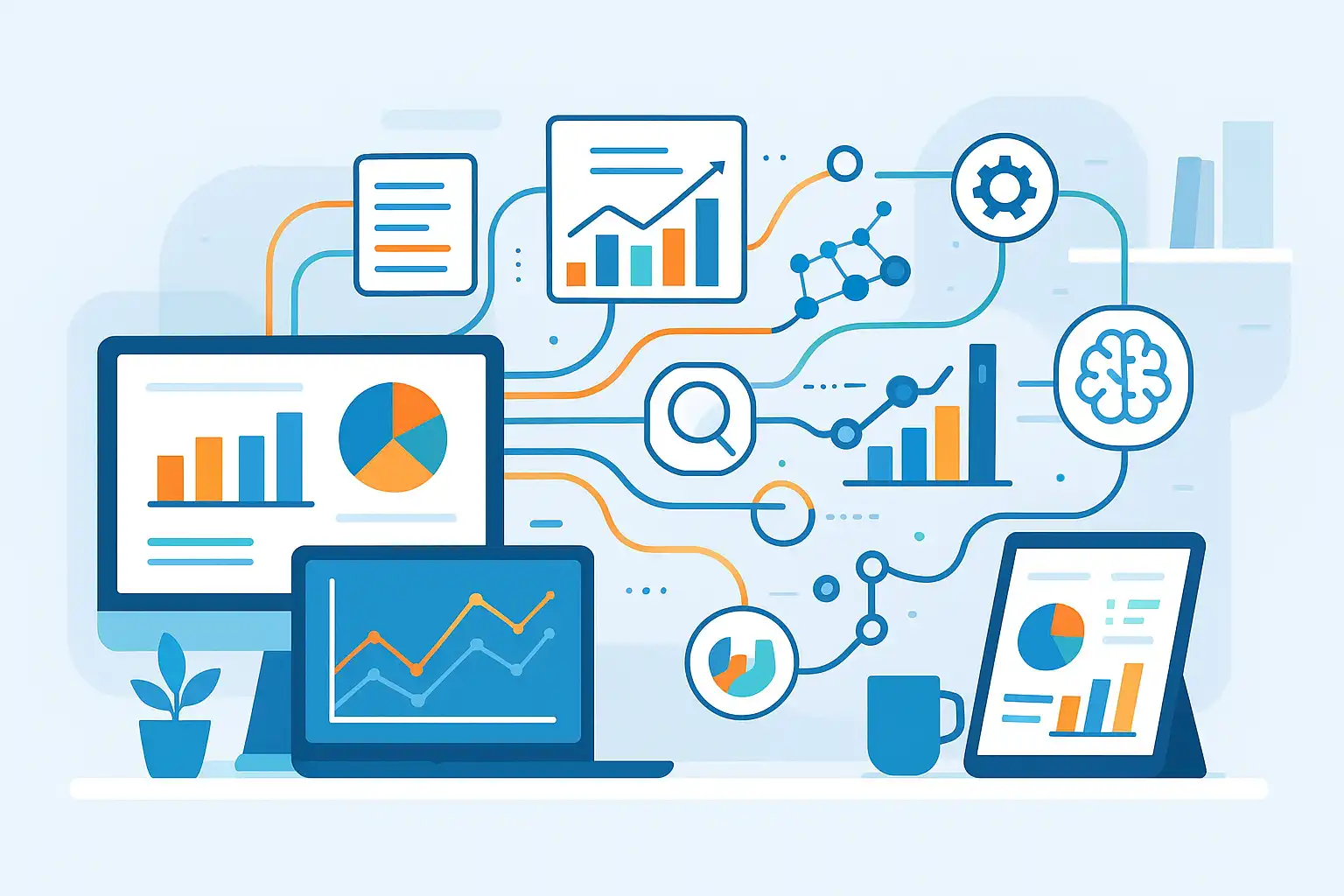
Data analytics explained in plain English for business leaders
If you’ve ever wondered about “data analytics meaning” and how it impacts your day-to-day decisions as a business leader, you’re in the right place. In simple terms, data analytics is all about collecting, examining, and using information to make better decisions. Imagine taking numbers, sales figures, customer reviews, or website visits, and turning them into clear, actionable insights. Instead of guessing what works, you use facts and trends to guide your company forward. This article covers everything you need to know about how data analytics can help you grow your business, avoid costly mistakes, and stay ahead of the competition—all without jargon or technical confusion.
What is data analytics and why does it matter for business leaders?
Data analytics is the process of examining raw data to find patterns, draw conclusions, and support smarter decisions. For business leaders, it means using facts instead of gut feelings. The main reason data analytics matters so much for businesses today is the sheer amount of information generated every second. From sales transactions and website clicks to social media mentions, businesses are flooded with data. Without a way to make sense of it, valuable opportunities can be missed and risks overlooked.
At its core, data analytics transforms overwhelming amounts of information into easy-to-understand insights. This enables leaders to identify what’s working, what needs improvement, and where the next big opportunity might be. For example, an online retailer might use data analytics to determine which products are trending, while a logistics company might analyze delivery times to improve efficiency.
Leaders who embrace data analytics can make decisions based on evidence. This means higher profits, faster growth, and less wasted effort. In competitive markets, the difference between success and failure often comes down to how well a business can interpret and act on its data.

How does the data analytics process work step by step?
Understanding how data analytics works is essential for any leader aiming to make informed choices. Here’s a straightforward breakdown of the typical data analytics process:
- Define the question or goal: Start by asking a clear question. For example, “Why have sales dropped this quarter?” or “Which marketing channel brings the highest return?”
- Collect relevant data: Identify and gather the right data. This might come from sales records, website analytics, customer surveys, or external sources.
- Clean and prepare the data: Raw data often has errors or gaps. Clean-up removes duplicates, fills missing values, and ensures everything is accurate and consistent.
- Analyze the data: Use statistical tools and software to examine the data. This step uncovers trends, relationships, and insights—such as which factors lead to increased customer loyalty.
- Interpret results: Translate complex analysis into clear takeaways. For instance, you might learn that a price drop led to higher sales, or that customer complaints relate to a specific product line.
- Take action and monitor: Use these insights to make decisions. Afterward, track results and adjust your approach as needed.
Each step relies on the last, forming a cycle of continuous improvement. By repeating this process, leaders can adapt to new information, changing markets, and evolving customer preferences.
Which key data analytics techniques should business leaders understand to improve company performance?
There are many techniques within data analytics, but not all are equally important for every business leader. Here are the main approaches you should know:
- Predictive modeling: This involves using historical data to forecast future outcomes. For example, retail stores use predictive models to anticipate which products will sell best during the holidays.
- Data visualization: Instead of raw numbers, visualization presents data in charts, graphs, or dashboards. This makes trends and patterns easy to spot at a glance, helping leaders quickly grasp complex results.
- Data mining: This technique digs deep into large datasets to find hidden patterns or correlations. For example, banks use data mining to spot unusual transactions and prevent fraud.
- Artificial intelligence and machine learning: Advanced algorithms can recognize patterns humans might miss. For instance, AI can analyze customer feedback at scale, finding common themes or emerging concerns.
- Optimization: Using mathematical models, businesses can find the best way to allocate resources, set prices, or schedule staff to maximize efficiency and profits.
- Simulation: Digital models let companies test different scenarios virtually, such as simulating the impact of a new marketing campaign or a supply chain disruption before changes are made in real life.
Mastery of these techniques can help leaders streamline operations, improve products, and deliver better customer experiences. Often, companies rely on a blend of several methods to tackle different business challenges.
What are the main types of data analytics?
Generally, data analytics is divided into four main types. Understanding each type helps you find the right tool for the job:
- Descriptive analytics: Answers the question, “What happened?” For example, sales reports showing last month’s performance.
- Diagnostic analytics: Looks at “Why did it happen?” This digs deeper, identifying root causes behind results, such as linking a sales drop to a specific marketing change.
- Predictive analytics: Forecasts “What is likely to happen next?” These models use historical data to predict future trends and outcomes, such as next quarter’s sales.
- Prescriptive analytics: Recommends “What should we do about it?” These solutions suggest actions, like how much inventory to order or which customer segment to target.
The simplest analytics answer basic questions, while advanced types require more sophisticated data, tools, and expertise. Often, businesses start with descriptive and gradually add the others as their data skills grow.
How can business leaders use data analytics to make informed decisions?
Making informed decisions means relying on evidence rather than assumptions. Data analytics arms leaders with the facts needed to choose the best path forward. Here are common ways this works in practice:
- Identifying trends: Spotting upward or downward shifts in sales, customer satisfaction, or productivity gives early warning for needed changes.
- Optimizing operations: Discovering bottlenecks or inefficiencies lets leaders reallocate resources for smoother processes.
- Improving marketing: By analyzing customer data, companies can refine targeting, personalize offers, and boost campaign results.
- Product development: Understanding which features customers value most guides innovation and reduces wasted effort.
- Risk management: Detecting fraud, forecasting disruptions, or assessing supplier reliability all depend on robust data analysis.
For example, a restaurant chain might use analytics to spot high-performing menu items and phase out poor sellers. Or a clothing retailer could analyze online browsing and purchase patterns to optimize inventory for the next season. In every case, the power lies in turning raw information into practical, business-driving insights.
What tools and technologies are used for data analytics in business?
Business leaders don’t need to be technical experts, but knowing the main tools helps you make smart investments. Here are some widely used options:
- Spreadsheets: Programs like Microsoft Excel or Google Sheets handle small datasets for basic analysis.
- Business Intelligence (BI) platforms: Solutions like Tableau, Power BI, and Looker let staff analyze and visualize larger datasets with interactive dashboards.
- Customer Relationship Management (CRM) systems: Tools such as Salesforce or HubSpot collect and analyze customer data to sharpen marketing and sales efforts.
- Statistical software: R, Python, and SAS are more technical platforms for deeper analysis, often used by data scientists or analysts.
- Cloud platforms: Services from Google Cloud, AWS, and Microsoft Azure provide scalable solutions for storing and analyzing massive data volumes.
- Automation and AI tools: Newer solutions automate routine analysis and can generate predictions or recommendations with minimal human input.
For organizations seeking an end-to-end approach, turning to a data science service can be a practical step. These providers offer expertise, tools, and processes tailored to your business, helping you accelerate your analytics journey.
How can data analytics help leaders identify new opportunities and manage risks?
One of the most powerful uses of data analytics is uncovering areas for growth and spotting potential setbacks early. Here’s how it works:
- Market analysis: By examining trends and customer behavior, leaders can identify gaps in the market, new customer segments, or regions for expansion.
- Product innovation: Customer feedback and usage patterns highlight what features to add or improve, guiding smarter product decisions.
- Competitive intelligence: Tracking competitor performance helps you benchmark progress and spot opportunities to differentiate.
- Risk detection: Pattern recognition helps forecast supply chain disruptions, fraud, or financial shortfalls, so you can act before problems escalate.
- Scenario planning: Simulations let you test strategies in a digital environment, assessing impacts before making real-world changes.
Imagine a manufacturing business noticing customer complaints spike in winter. Data analytics might reveal the root cause—delivery delays due to weather—leading to improved logistics planning and happier customers. In another scenario, a company may use predictive analytics to spot a likely dip in demand and shift marketing resources to compensate. Leaders with a strong grip on analytics can adapt faster, seize new opportunities, and avoid disasters.
What challenges do companies face when adopting data analytics?
While the benefits are clear, some hurdles can slow or block successful analytics adoption. Common challenges include:
- Data quality: Incomplete, inconsistent, or outdated data can lead to incorrect conclusions. Ensuring data is accurate and up to date is critical.
- Skill gaps: Not all team members have experience in analysis or interpreting results, which can make insights hard to act on.
- Technology integration: Bringing in new tools may require changes to existing systems or workflows.
- Change management: Staff may resist new data-driven processes, especially if they’re used to intuition-based decision-making.
- Cost and resources: Investing in tools, training, or expert help often comes with upfront costs, but the payback can be significant.
Companies can overcome these obstacles by starting small—focusing on high-impact, manageable projects first. Regular training helps build skills and confidence across the team. When in doubt, following a structured data science workflow ensures good practices and reliable outcomes.
How does data analytics support smarter, faster business decisions?
Speed and accuracy are crucial for modern leaders. Data analytics supports these needs in several ways:
- Real-time dashboards: Interactive displays provide up-to-the-minute information, allowing immediate responses to changes.
- Automated insights: AI-powered analytics tools can alert leaders to issues or opportunities without waiting for manual reports.
- Scenario comparisons: Modeling different choices helps predict likely outcomes and choose the best strategy.
- Continuous improvement: By tracking results over time, businesses can refine strategies, products, and processes for ongoing gains.
With the support of automated reporting insights, leaders can spot trends faster and free up time for higher-value decisions. This agility is especially important in industries where customer demands or market conditions change rapidly.
The pros and cons of using data analytics in business
| Advantages | Disadvantages |
|---|---|
|
|
By weighing these pros and cons, leaders can make informed decisions about how much to invest in analytics and which approach is best for their organization.
How can businesses get started with data analytics?
Beginning your data analytics journey doesn’t have to be overwhelming. Here are steps to get you moving effectively:
- Clarify objectives: Decide what questions you want answered or what problems you need to solve.
- Assess available data: Take stock of what information you already collect and identify gaps.
- Choose the right tools: Start with user-friendly platforms that match your needs and resources.
- Build a team: Assign responsibilities and consider external experts if needed.
- Start small: Pick a single project that can deliver quick wins and build confidence.
- Scale up: As your skills and comfort grow, expand analytics across other departments or processes.
Organizations new to analytics often face similar issues. Learning from Data Science Challenges in your industry helps sidestep common pitfalls, speeding up your path to success.
What is the future of data analytics for business leaders?
Looking ahead, data analytics will only become more important. As technologies like AI and machine learning evolve, businesses will gain even faster, more accurate insights. Automation will handle routine tasks, leaving humans free to focus on complex decisions and creative problem-solving. New opportunities—such as predicting customer needs in advance or responding instantly to market changes—will be within reach for businesses of all sizes.
The shift toward more accessible and intuitive analytics tools will also continue, empowering leaders at every level to interpret data and act quickly. Data literacy—knowing how to read, understand, and use data—will become an essential leadership skill.
In summary, businesses that cultivate a strong analytics culture will be best equipped to face future competition, uncertainty, and opportunity. The key is to start early, stay curious, and keep learning as the field evolves.

Questions about data analytics meaning every business leader should consider
- Is data analytics only valuable for large companies, or can small businesses also benefit?
Data analytics is useful for organizations of every size. Small businesses can use simple tools—like spreadsheets and basic dashboards—to track sales, customer preferences, and marketing effectiveness. As the business grows, analytics can scale with it, offering increasingly powerful insights and a competitive edge. - How do I ensure my team makes decisions based on data, not just intuition?
Encourage a culture of data-driven decision making by setting clear expectations, providing training, and celebrating successes achieved through analytics. Make sure staff have access to relevant data and easy-to-use reporting tools. Over time, this approach will become second nature. - What should I do if our data gives conflicting or unexpected results?
Start by checking data quality, as errors or inconsistencies can skew results. Next, review your methods to ensure analysis was done correctly. It may also help to collect more data or seek expert advice. Unexpected findings can uncover areas for improvement or new opportunities, so treat them as valuable learning experiences. - How can I measure the value of data analytics in my business?
Set clear goals—such as increasing sales, reducing costs, or improving customer satisfaction—before launching projects. Track changes using key performance indicators (KPIs). Over time, compare results before and after adopting analytics to see the impact on your bottom line and overall performance.
Ultimately, understanding data analytics meaning and applying it thoughtfully can transform the way you run your business. In a world where information is everywhere, having the skills to find, analyze, and act on the right data sets you apart as a forward-thinking leader.