
Seasonal Time Series Forecasting Made Simple
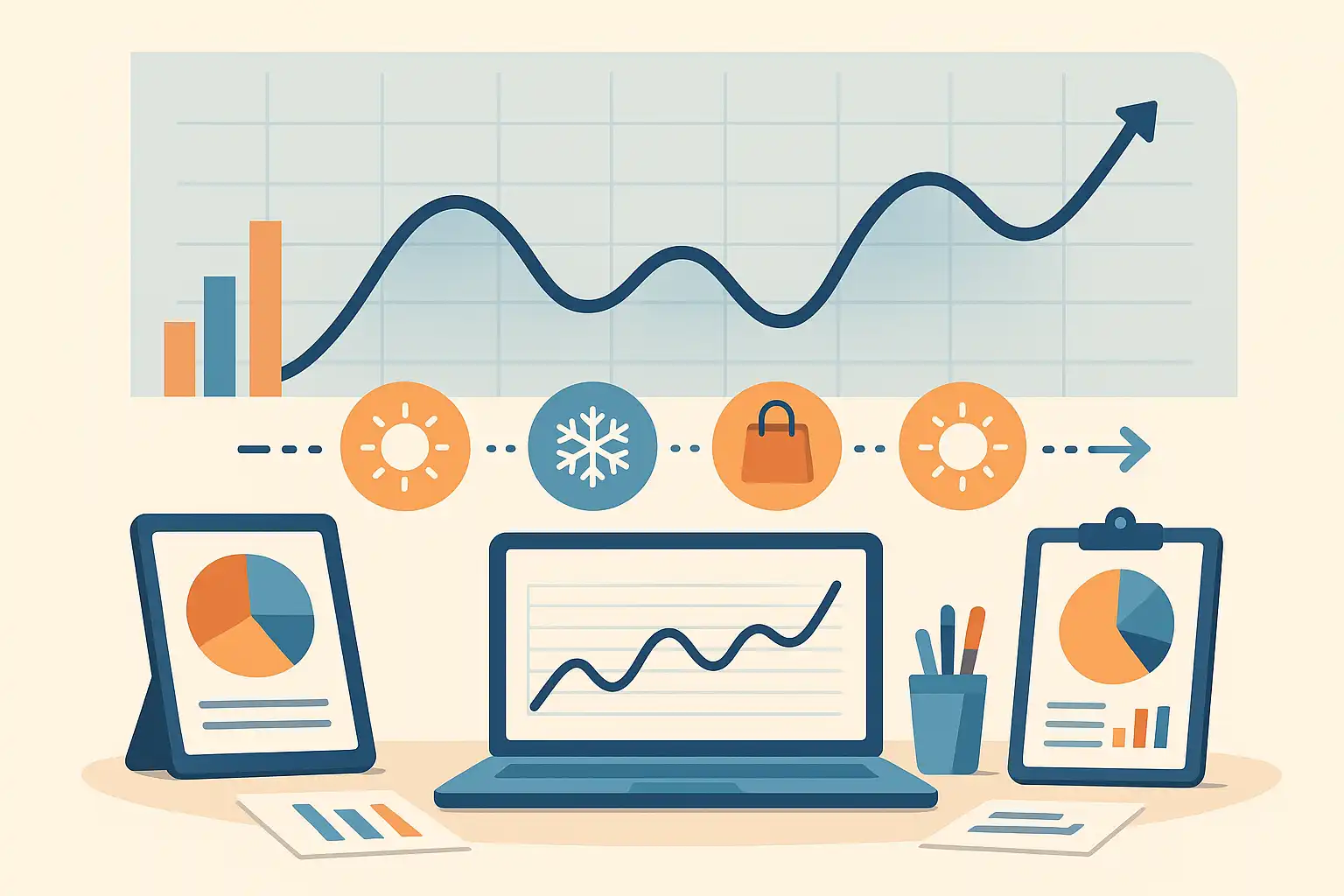
If you’ve ever wondered how to predict patterns that repeat over time—like higher ice cream sales every summer or more electricity use in winter—you’re already thinking about seasonal time series forecasting. In plain terms, this method helps us forecast future values when data shows clear cycles over days, months, or years. By understanding and using these rhythms, anyone can make better predictions, whether you’re running a business, analyzing climate, or just curious about trends.
Right away: seasonal time series forecasting is the process of predicting values based on historical data that repeats in regular, seasonal cycles. It could be weekly website visits peaking on Mondays, retail sales jumping before holidays, or temperature dipping every winter. This approach uses the predictable ups and downs in our data to give us a clearer, more accurate view of what’s likely to come next.
Let’s walk through what it is, why it’s valuable, and how anyone—even without a background in statistics—can get started. We’ll also highlight helpful tools, practical steps, and answer common questions, making this guide accessible and actionable for everyone.
What is seasonal time series forecasting and why does it matter?
Think of time series data as a sequence—readings or values collected over time, like daily stock prices, monthly rainfall, or hourly website traffic. When these numbers show “seasons” or cycles that repeat, we call that seasonality. Seasonal time series forecasting looks at these repeating cycles to make predictions about the future.
For example, ice cream shops often see sales soar in the summer and dip in winter. By looking at past sales and the time of year, they can order the right amount of stock. Seasonal forecasting isn’t just for business; it’s used in energy, healthcare, transport, and climate science as well. In essence, it helps us expect the expected—and prepare for it.
Understanding these cycles allows planners to manage inventory, set prices, schedule staff, and avoid being caught off guard by demand surges or drops. This is valuable for small shops, large corporations, government agencies, and researchers alike. With the right approach, time series forecasting can turn raw data into real-world decisions.

How do you recognize seasonality in your data?
Spotting seasonality might seem tricky, but some simple signs make it clear. Look for repeating patterns at fixed intervals: higher shopping activity before holidays, increased water use during hot months, or lower traffic on weekends. Visualizing your data by plotting it on a graph helps a lot, as cycles often stand out. Sometimes, seasonal patterns don’t align exactly with the calendar (like school semesters), so always check for less obvious rhythms.
Many tools—like Microsoft Excel, R, or Python’s pandas—let you quickly plot your data. Once the cycles become clear, you can move on to modeling and forecasting. Recognizing seasonality is the foundation for better predictions and smarter decisions.
Tools for identifying and forecasting seasonality
- Excel: Simple charts and built-in forecasting features help spot and project trends.
- R: Popular libraries such as forecast and ts make time series analysis approachable.
- Python: pandas for data wrangling, matplotlib for plotting, and statsmodels or Prophet for advanced forecasting.
- Cloud platforms: Google Cloud AI, Amazon Forecast, and specialized services offer scalable options with friendly interfaces.
What are the basic steps for seasonal time series forecasting?
Getting started doesn’t have to be complicated. Here’s a straightforward path anyone can follow:
- Gather your data: Collect data points at regular time intervals—daily, weekly, monthly, etc.
- Plot the data: Use a line chart to visualize trends and cycles. Patterns often pop when you see them on a graph.
- Identify seasonality: Look for peaks, valleys, and repeating cycles. Note the time between them—this is your season length.
- Choose a forecasting method: For beginners, moving averages or Excel’s “Forecast Sheet” are a good start. For more accuracy, look into ARIMA, exponential smoothing, or Prophet.
- Build the model: Use your tool of choice to train the model on historical data, mapping both the overall trend and seasonal pattern.
- Test and refine: Compare forecasts with actual outcomes. Adjust settings or try another method if needed for better accuracy.
- Use the forecast: Plan inventory, staffing, or marketing based on the predicted peaks and valleys.
Along this journey, a good understanding of your specific domain is crucial. For instance, a retailer will want to watch for Black Friday or local holidays, while a farmer might focus on weather cycles.
Popular forecasting techniques for seasonality
- Moving Average: Smooths out noise to highlight trends. Best for short-term, straightforward cycles.
- Exponential Smoothing (ETS): Gives more weight to recent data. Useful for trajectories with seasonality and trend.
- ARIMA (AutoRegressive Integrated Moving Average): Tackles trend, seasonality, and noise with statistical rigor.
- Prophet: Facebook’s open-source tool for business forecasting, designed to handle a variety of seasonal patterns.
Libraries and services exist for each approach, so you don’t have to reinvent the wheel. Many small businesses rely on Excel or Google Sheets, while data analysts use Python or R for more complex needs. When selecting a tool, consider the size of your data, the required accuracy, and your comfort with technical details.
How can you avoid common pitfalls in seasonal forecasting?
One common mistake is ignoring external events. For instance, a one-off sales promotion or a pandemic can break the usual cycle. Outliers like these should be marked or removed when modeling. Data gaps or missing entries can also throw off the forecast, so double-check data quality before building your model.
Another pitfall is overfitting—making your model so sensitive to past quirks that it predicts noise, not real patterns. Always validate your model by comparing forecasts to real outcomes not used in training. Keeping your model simple often leads to better and more reliable results than chasing perfection.
For larger datasets or scenarios where data streams in constantly, businesses often turn to modern analytics services. For example, those who need to process real-time information might adopt Time Series Analytics platforms that can handle continuous updates and highlight changing seasonal patterns automatically.
Advantages and limitations of seasonal time series forecasting
| Advantages | Limitations |
|---|---|
|
|
Despite its limitations, time‑series forecasting remains a practical tool for decision making—especially when combined with human insight!
FAQs on Seasonal Time Series Forecasting
Can I use seasonal time series forecasting for any dataset?
It’s best suited for datasets with clear, repeating patterns. If your data jumps around with no visible rhythm, other forecasting methods might work better.
Do I need advanced math or coding skills to get started?
No. Basic seasonal forecasting can be done in Excel or Google Sheets with built-in tools. More advanced techniques might benefit from using R or Python, but many online tutorials make them accessible to beginners.
How much data do I need for accurate seasonal forecasts?
Ideally, you should have at least two full cycles of your season. For example, if seasonality lasts one year, two or more years of data gives better results. More data usually means better, more stable predictions.
What should I do if something unusual happens, like a sudden sales spike?
Mark those outliers in your data or temporarily remove them when modeling. Make a note of the reason, as this helps make your forecast more realistic and avoids misleading predictions.